August 11, 2026 • Mara Voss • 10 min reading time • Prices verified June 6, 2026
Waterless Nebulizer Diffusers for Cars: Premium Tech, Real Reliability Questions
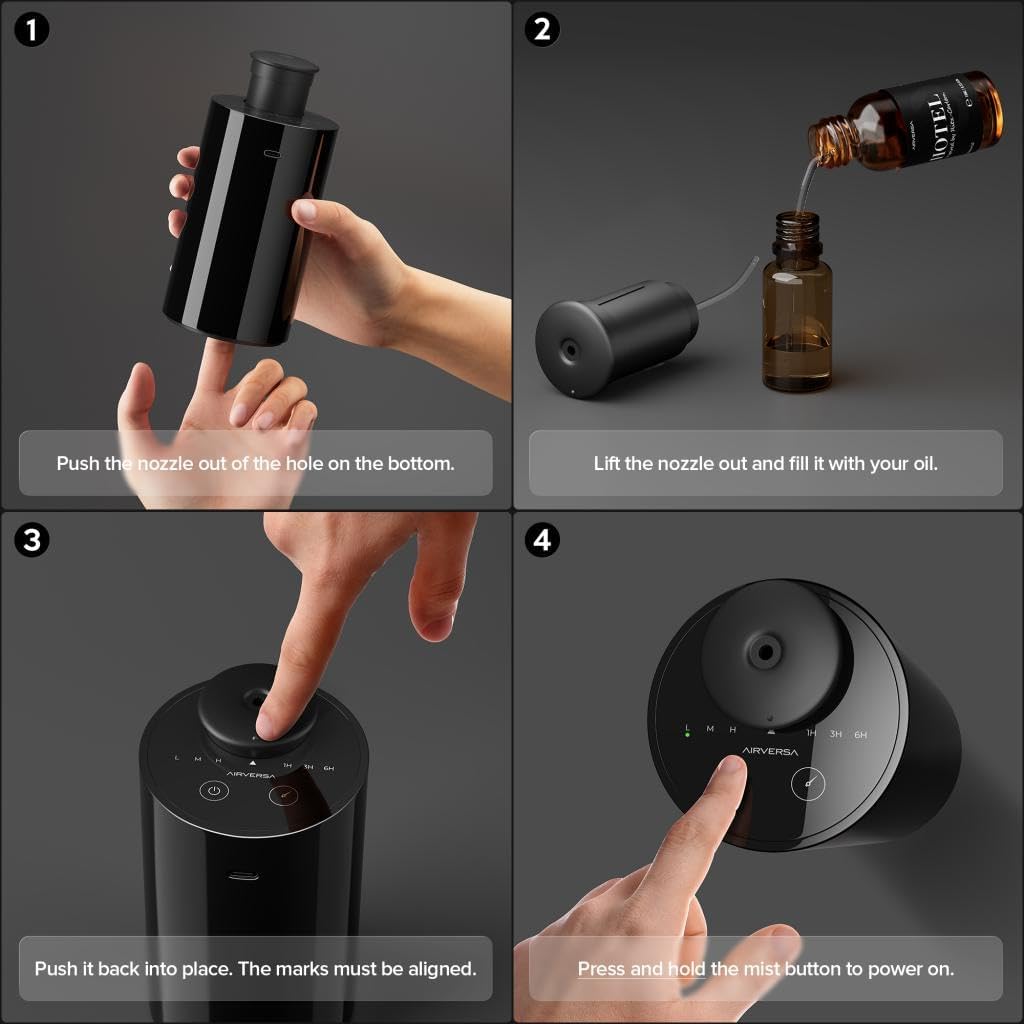
A waterless nebulizer diffuser sounds like a mouthful, but the concept is straightforward: instead of soaking a pad or using heat to evaporate fragrance, these small devices use cold compressed air to break your chosen scent oil into an ultra-fine mist — so fine the droplets stay airborne longer and hit your nose as a fuller, more complex scent rather than a sharp chemical spike. No water tank means no mold risk and no dilution of the oil’s natural character. The appeal for car use is real. These units clip to vents or mount to dashboards and can cost anywhere from $30 to over $100, putting them squarely above the Little Trees impulse buy but below a full luxury cabin fragrance installation. If you’re weighing one right now, the core question isn’t whether the technology works — it does. The question is whether the specific unit you’re looking at will still be working in three months.
That’s the gap this article addresses. Across hundreds of aggregated owner reviews for Airversa, Ceeniu, Featwell, Hitolza, and the Pura Car Pro, a pattern emerges that almost no existing coverage names directly: first-month impressions are almost uniformly glowing, and long-term reliability is a genuinely open question depending on brand. Here’s the decision framework you need.
| EDITOR'S PICKCeeniu Smart Car Air Fresheners | Mid-tierPura Car Diffuser - Portable Fr… | Budget pickAirversa Waterless Diffuser for… | |
|---|---|---|---|
| Diffusion method | Ultrasonic mist | — | Nebulizer |
| Auto on/off | ✓ | Acceleration-based | — |
| Adjustable output | ✓ | App intensity | 3 mist levels |
| App control | — | ✓ | — |
| Capacity | — | — | 0.7 fl oz / 20mL |
| Fragrance included | Natural fragrance | Sold separately | — |
| Price | $99.99 | $34.99 | $27.99 |
| See on Amazon → | See on Amazon → | See on Amazon → |
The Honeymoon Problem: Why “Glowing Reviews” Deserve a Second Look
Owners across all four hardware brands describe the same early experience. Passengers notice the scent immediately. The cabin feels transformed. The device is quiet, the mist is subtle, and — compared to a vent clip soaked in synthetic fragrance — the quality difference feels obvious.
Reviewers at Basenotes.net and Fragrantica community threads have consistently noted that cold-air nebulization preserves more of a fragrance’s top and middle note structure than heat-based or passive evaporation methods. In a car, where you’re in an enclosed space for 20–60 minutes at a time, that nuance matters more than it would in a large room.
But glowing first-month impressions don’t tell you much about build quality. Short review windows naturally favor honeymoon experiences. The durability signal is buried in the minority of long-term reviews, and that’s exactly where the brands in this category diverge sharply.
By the numbers:
- Typical nebulizer mist particle size: 1–5 microns (vs. 20–50 microns for ultrasonic/water diffusers)
- Meaningful scent throw in a standard car cabin: achievable in 5–10 minutes at low intensity
- Price range for the units reviewed here: approximately $35–$110
- Long-term reviews (90 days or more) represent less than 15% of total posted reviews across this category on major retail platforms — which is why the pattern is easy to miss
Brand-by-Brand Reliability Picture: What Long-Term Owners Actually Report
Ceeniu: The Reliability Leader in This Cluster
Of the brands covered here, Ceeniu stands out as the clearest reliability signal in the positive direction. At least one owner publicly documents consistent use past the six-month mark without performance degradation — and in a category where most reviewers check in at two to four weeks, six months of reported uptime is meaningful. The unit’s scent intensity controls and compatibility with third-party oils add flexibility that owners clearly value. If your primary concern is longevity and you’re willing to do less experimentation, Ceeniu is where the evidence points.
Hitolza: The Critical Failure Case
This is the review the category needs you to see. A verified long-term owner of the Hitolza unit reports that the device began displaying false low-battery warnings after approximately one month of use. By the two-month mark, the unit stopped functioning entirely. The reviewer further notes that the company did not resolve the issue before the review was posted — meaning the warranty or customer support path either wasn’t offered, wasn’t responsive, or didn’t arrive in time to change the reviewer’s verdict.
That’s a specific, attributable failure pattern: false battery warnings as an early symptom, total unit failure within 60 days, and an unresolved support interaction. For a category where units range from $40 to $100+, a two-month lifespan is an unacceptable cost-per-day outcome. Wirecutter’s framework for evaluating accessory longevity — which emphasizes verifying that warranty claims are actually honored, not just advertised — is directly relevant here. The Hitolza case is a trust signal about the brand, not just about one faulty unit.
Pura Car Pro: Genuinely Useful Smart Features
The Pura Car Pro earns its own section because it solves a real problem rather than just adding tech for its own sake. The acceleration-triggered auto on/off feature — which activates the diffuser when the car is in motion and pauses it when you’re stopped — is consistently described by owners as intuitive rather than gimmicky. In practice, this means you’re not wasting fragrance oil sitting in a parking lot, and you’re not scrambling to remember to turn the device off. Owners also praise the USB power connection, which eliminates the battery replacement or recharge cycle entirely and doesn’t consume a physical vent slot on vehicles where airflow is tightly managed.
Good Housekeeping’s coverage of smart home diffuser technology notes that motion- and sensor-triggered activation meaningfully extends oil life compared to always-on operation — and the same logic applies in a car cabin, where enclosed volume means fragrance accumulates quickly. For drivers who commute inconsistently or make frequent stops, the Pura Car Pro’s approach to power and activation is genuinely differentiated.
The Pura ecosystem does use proprietary refill cartridges, which is the trade-off to name clearly: you’re not filling from your own oil collection.
Airversa: Solid Entry, Limited Long-Term Data
Airversa first-month reviews follow the same honeymoon pattern — owners are impressed, the scent quality reads as clearly above passive fresheners, and the form factor draws compliments. But the long-term data trail is thin. Absence of failure reports isn’t the same as confirmed reliability, and in this category, the difference matters. Airversa is a reasonable consideration if price is a deciding factor, but it belongs in the “watch and wait” column compared to Ceeniu on the durability question.
Featwell: Mounting Is the Complaint, Not the Scent
Featwell’s scent performance doesn’t generate meaningful complaints — owners are satisfied with the diffusion quality. The friction point is physical: reviewers specifically call out the lack of a dashboard adhesive mounting option. The unit ships with vent clip hardware, and for drivers with modern flat vents, recessed vents, or vehicle interiors where airflow from the vent would undermine the diffuser’s performance, that’s a genuine limitation. Car and Driver’s notes on EV and modern cabin ergonomics highlight how non-traditional vent geometry in vehicles like the Tesla Model 3 and Y makes vent-clip-only accessories frustrating to position. If you’re not in a traditional vent-clip-compatible vehicle, Featwell’s current hardware limits your options.
The Oil Compatibility Question: Lock-In vs. Flexibility
This is the sharpest product decision fork in the nebulizer category. Some units — Pura Car Pro being the primary example here — use proprietary cartridges. Others, including Ceeniu and Featwell, accept third-party and fill-your-own essential oils.
The lock-in math is real. A proprietary refill cartridge typically costs $12–$20 per scent and lasts four to eight weeks at moderate use. Fill-your-own with quality essential oils or perfume-grade fragrance concentrates runs meaningfully lower per milliliter, and — critically — gives fragrance collectors access to oils they already own or curate through artisan suppliers.
Fragrantica community discussion on nebulizer compatibility consistently surfaces a practical caveat: very thick or resinous oils (oud bases, some sandalwood concentrations, dense musks) can clog nebulizer atomizers designed for thinner carrier-free oils. If you’re working with a complex oil library, check viscosity compatibility before filling. The flexibility of fill-your-own is real, but it comes with the responsibility to understand your oils.
If you prefer curation without that friction — and you’re willing to pay the per-cartridge premium — the proprietary refill path (Pura’s model) is defensible. If you’re a fragrance collector or detailer sourcing scents in volume, fill-your-own flexibility is the clear choice.
If X, Then Y: The Decision Rules
Given everything the review record shows, here’s how to map your situation to a recommendation:
If your primary concern is long-term reliability, the evidence points toward Ceeniu. It’s the only brand in this cluster with documented six-months-plus performance from real owners.
If you want smart features and don’t mind a proprietary refill ecosystem, the Pura Car Pro’s acceleration-triggered auto on/off and USB power are genuinely well-executed. The locked refill system is the trade-off you’re accepting.
If you drive an EV or a modern vehicle with non-standard vents, rule out Featwell until the brand adds a dashboard adhesive mount option. Fit issues will frustrate you before scent quality becomes relevant.
If you’re evaluating Hitolza, the two-month total failure report and unresolved customer service interaction are disqualifying for most buyers. The risk-adjusted cost-per-day math doesn’t close.
If you’re a detailer buying for client vehicles, fill-your-own compatibility (Ceeniu’s model) lets you source consistent scent profiles in volume without per-cartridge margin bleed. Ceeniu’s reliability record makes it the practical professional default in this cluster.
Frequently Asked Questions
How long do waterless nebulizer car diffusers actually last before breaking down? The honest answer is that the data is uneven. Ceeniu has documented six-months-plus performance. Hitolza generated a confirmed two-month failure from a long-term reviewer who reported unresolved customer service. Most reviews are posted within the first four weeks, which means durability evidence is thin across the category. Build conservatively into your expectations and prioritize brands with transparent warranty policies.
Can I use any essential oil in these diffusers, or am I locked into proprietary refills? It depends on the unit. Pura Car Pro uses a proprietary cartridge system. Ceeniu and Featwell accept third-party oils. If you fill your own, be aware that very thick or resinous oils can clog atomizer heads — thinner carrier-free oils perform best in most nebulizer designs. The Fragrantica community and Basenotes.net threads are good practical resources for oil-compatibility discussion.
How does the Pura Car Pro auto on/off feature work — does it really trigger on acceleration? Per owner reports, yes — the Pura Car Pro uses motion detection linked to vehicle movement to activate and pause the diffuser. Owners consistently describe it as genuinely useful rather than a marketing claim. The diffuser runs while you’re driving and pauses when stopped, which extends oil life meaningfully compared to an always-on device.
Is the scent from a nebulizer noticeably better than a standard vent clip? Owners and fragrance community reviewers consistently say yes, with a specific caveat. Cold-air nebulization preserves more of a fragrance’s top and mid-note structure, which reads as more complex and natural in an enclosed cabin. The gap is most noticeable with quality oils; synthetic mass-market fragrances tend to smell similar regardless of delivery method.
What happens if the unit fails — do these brands have responsive customer service? This is the weakest point in the category. The Hitolza long-term failure review explicitly documents that the company did not resolve the reviewer’s issue before the review was posted. Pura has a more established brand infrastructure and a broader customer service track record. Before buying any unit in this category, search specifically for long-term warranty resolution experiences, not just first-month satisfaction.
How long does a single charge last on battery-operated car nebulizers? Manufacturer specs vary, but most battery-operated units in this category are rated for four to eight hours of continuous use at moderate intensity. Real-world owner reports tend to land at the lower end of that range, especially at higher intensity settings. For daily commuters, a weekly or twice-weekly recharge cycle is typical. The Pura Car Pro sidesteps this entirely with USB power draw.