September 13, 2026 • Mara Voss • 11 min reading time • Prices verified June 6, 2026
Smart Car Diffuser Reliability: What Happens After the First Month
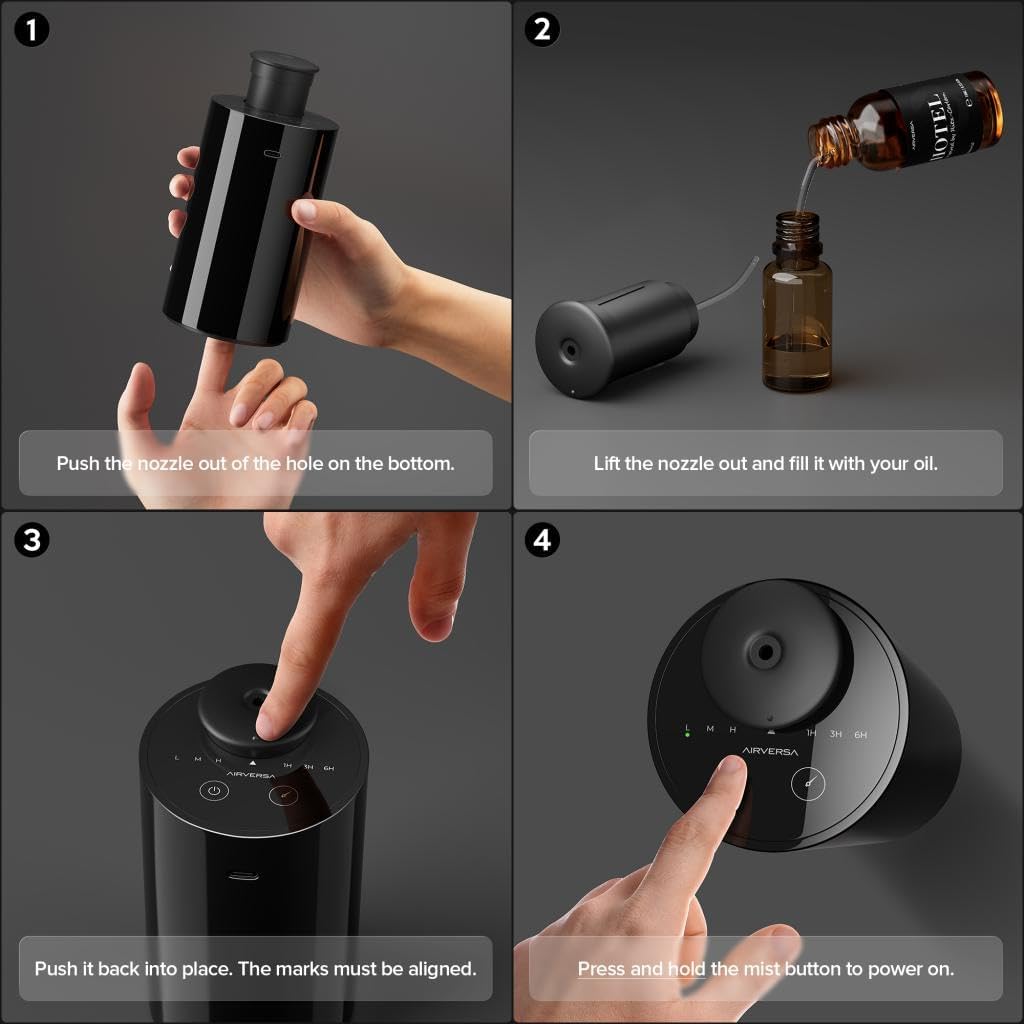
A smart car diffuser is a battery-powered or USB-powered device that sits inside your vehicle and actively disperses fragrance — through ultrasonic mist, a fan, or a heated element — rather than just hanging there and passively releasing scent like a cardboard tree or a gel puck. The appeal is real: consistent scent-throw regardless of outside temperature, adjustable intensity, and in some cases smartphone control. But “smart” adds components, and more components mean more failure points. If you’ve been running one of these units for a month and everything still works, that’s great — but month one is also where most durability problems haven’t shown up yet. This article is for the driver who’s past the honeymoon period, or wants to pressure-test a purchase decision before the return window closes.
Below, we dig into the specific failure patterns that aggregated owner reviews reveal across the most-discussed units in this category, name the tradeoffs bluntly, and give you a clear decision framework for what to buy — or return.
The Failure Pattern Nobody Warns You About Up Front
The durability story in this category is not random. Across aggregated long-run owner reviews, there’s a consistent shape to how smart diffusers fail: they work well for four to eight weeks, then either the battery management system starts misbehaving, the charging circuit dies, or a firmware-adjacent quirk emerges that the manufacturer support team can’t (or won’t) resolve.
The most striking documented case involves the Hitolza smart car diffuser. One owner left what’s become a frequently-cited one-star review that stands out precisely because it’s not an angry impulse post — the reviewer explicitly said they liked the product and watched it work well before it failed at roughly the two-month mark with battery indicator errors (the unit was showing charge states that didn’t correspond to real battery behavior). Critically, the reviewer contacted the company before leaving the review, seeking a fix. No satisfactory resolution came. That sequence — like the product, watch it fail, try support, get nowhere, leave the review — is the consumer review equivalent of a detailed engineering complaint, and it deserves to be weighted more heavily than a vague “stopped working” one-star. Wirecutter’s 2025 car air freshener overview notes that battery-powered active diffusers in the sub-$50 segment have meaningfully shorter average lifespans than passive alternatives; the Hitolza pattern fits that finding.
Decision frame: If you’re buying a battery-powered smart diffuser, your return window is your insurance policy. Buying from a retailer with a 30-day no-questions return is the floor; 90 days is better. Don’t assume a month of good operation means the hardware is proven.
The Pura Car Pro: Quality Control Split Is the Real Story
The Pura Car Pro sits in the premium tier — it’s an app-connected diffuser built around Pura’s ecosystem of proprietary fragrance cartridges — and its owner reviews reveal something more troubling than a single failure mode: a genuine quality-control split at the unit level.
One long-run owner used their Pura Car Pro continuously for over a year without a single issue. That’s a meaningful data point; a 12-plus-month continuous run in a vehicle cabin (temperature swings, vibration, UV exposure through glass) is genuinely hard on electronics. But sitting directly alongside that review are accounts from buyers who purchased two units as gifts — both arrived unable to charge out of the box. Dead on arrival, plural, from the same order.
A critical reviewer made a comment that’s worth sitting with: they described the Pura Car Pro as “just a gel and a fan,” implying the premium price doesn’t reflect proportionally premium engineering. Is that fair? Partially. The fragrance delivery mechanism in most consumer-tier smart diffusers really is a fan moving air over a scented medium, with a microcontroller and app connectivity layered on top. The premium is in the scent formulation, the app experience, and the ecosystem. Good Housekeeping’s 2025 car freshener roundup acknowledged Pura’s scent quality as a genuine differentiator — the fragrance itself is legitimately better-formulated than most mass-market competitors. But “better fragrance, inconsistent hardware” is a real trade-off, not a dismissible complaint.
By the numbers:
- Pura Car Pro long-run owners reporting zero issues at 12+ months: documented in verified reviews
- Pura Car Pro units arriving DOA in multi-unit purchases: two out of two in at least one documented case
- Implication: unit-level variance is high; buying multiples amplifies the lottery
Decision frame: If you want Pura’s scent quality and are buying one unit for yourself with a solid return window, the long-run reliability case exists. If you’re buying two or more as gifts — for clients, for fleet vehicles, as detailing station units — the DOA risk multiplies. Factor in a supplier’s replacement policy before ordering in volume.
Ceeniu and the Mode-Button Problem: Small Flaw, Real Friction
The Ceeniu ultrasonic smart car diffuser occupies a middle tier — it uses ultrasonic technology to generate a fine water-based mist that carries fragrance through the cabin. Reviewers are genuinely positive on the core experience; the mist-based delivery creates a more immersive scent environment than most fan-over-pad competitors.
But one design flaw appears consistently enough across reviews to be called a product-level issue rather than user error: the mode button, when pressed to cycle through settings, triggers a spray of mist as a side effect. So if you’re trying to turn down the intensity or switch modes while driving, you get an unintended scent burst. It’s not catastrophic — owners consistently characterize it as a minor annoyance rather than a dealbreaker — but it’s the kind of ergonomic friction that accumulates. For a professional detailer setting up a unit in a client vehicle and wanting precise control, it’s more than minor.
There’s also a residue question with ultrasonic mist diffusers that we’ll address directly in the FAQ section below.
Waterless Diffusers and the “Runs When Off” Problem
The waterless diffuser format — units like those in the Featwell lineup — takes a different technical approach: instead of ultrasonic mist, they nebulize or wick pure essential oil (or compatible fragrance oil) without adding water to the carrier. Owners who use their own essential oils consistently report satisfaction with the format flexibility; not being locked into a proprietary refill system is a meaningful advantage if you have a fragrance preference the big ecosystem brands don’t serve.
But one Featwell owner documented a failure mode that’s worth flagging: the unit sometimes continued running when the owner believed it was off, depleting the scent liquid faster than expected. This isn’t a dramatic failure — the unit didn’t break, it just ran. But scent liquid is where your ongoing cost lives in this format, and silent over-consumption directly affects cost-per-day math. If a waterless diffuser burns through oil 20% faster than you expect because of ambiguous off-state behavior, a $30 bottle of fragrance oil lasts six weeks instead of seven and a half. That compounds.
The App Dependency Question
Multiple units in this category — Pura Car Pro most prominently — are designed around smartphone app control. That’s worth examining for two distinct buyer profiles.
For the personal user who keeps their phone nearby and enjoys the scheduling and intensity features, app control is a genuine quality-of-life upgrade. For the professional detailer or fleet manager setting up units in vehicles they don’t personally drive, app dependency creates a management overhead problem. Who controls the app? Does the client need to download it? What happens when the app has an update that breaks a feature mid-deployment?
The FAQ section below addresses the specific Pura Car Pro question (does it work without the app?) and names the smart diffusers that operate entirely without app connectivity — which is a real specification to sort by if you’re purchasing for use cases where phone pairing isn’t practical.
Frequently Asked Questions
How long do smart car diffuser batteries actually last between charges?
Across owner reviews and published specs, battery-powered smart car diffusers in the $30–$80 range typically last between 8 and 20 hours per charge on medium intensity settings — with wide variance depending on the diffusion mechanism (ultrasonic draws more power than fan-over-pad) and the ambient temperature (cold weather degrades lithium batteries noticeably). Most owners in long-run reviews charge units every two to four days if they use their car daily. USB-powered units plugged into a 12V or USB-A outlet sidestep this entirely; if you drive enough that charging is an inconvenience, a wired unit eliminates the variable.
Can you use any essential oil in a waterless car diffuser, or only proprietary refills?
It depends on the specific unit. Waterless nebulizing diffusers — like the Featwell models — are generally designed to accept any 100% pure essential oil or compatible fragrance oil, and owners confirm this works as advertised. Ecosystem-locked units like the Pura Car Pro are designed around proprietary cartridges and are not intended for use with third-party oils; doing so voids the warranty and may damage the diffusion element. This is the central trade-off between the open-format and ecosystem-locked approaches: flexibility versus curated scent quality.
What happens to the Pura Car Pro if you don’t have the app — does it still work?
Based on how the unit is described in Pura’s published product materials and confirmed by owner accounts: the Pura Car Pro will run in a default mode without the app connected, but scheduling, intensity adjustment, and fragrance switching are app-dependent features. If you want more than basic on/off operation, you need the app. For buyers who want full app-free operation from day one, the Pura Car Pro is not the right fit.
Does the ultrasonic mist from a Ceeniu-style diffuser leave any moisture residue on car surfaces?
This comes up repeatedly in owner reviews and the answer is: minimally, under normal use, but proximity matters. Reviewers who mount the unit in a cupholder or close to upholstery occasionally note light condensation on nearby surfaces after extended sessions. Mounting the unit in an open central console area and keeping it away from leather, screens, and fabric reduces the risk substantially. The mist output is fine enough that it typically evaporates before traveling far — but owners with premium leather interiors or near-screen mounting positions should be aware of the variable.
Is there a smart car diffuser that works without needing an app at all?
Yes, and it’s worth sorting by this feature explicitly if app dependency is a concern. The Ceeniu and most Hitolza units operate via physical button controls only — no Bluetooth, no app, no account required. The Featwell waterless diffusers are similarly button-operated. The trade-off is that you lose scheduling and remote control features, but you gain simplicity, no account-creation friction, and operation that doesn’t depend on your phone’s battery or a working app version. For detailers setting up units in client vehicles, app-free operation is often the right call.
The Decision Rule
Smart diffusers are a genuinely better sensory experience than passive alternatives when they work. The scent-throw consistency, adjustability, and (in mist-based units) immersiveness are real upgrades. But the failure rate in this category — dead charging circuits, battery indicator errors, DOA units, ambiguous off-states — is meaningfully higher than you’d accept from a passive product, and the manufacturer support track record across these units is mixed at best.
If X, then Y:
- If you’re buying one unit for personal use → prioritize a generous return window over brand loyalty; give the unit 60 days of real use before you’re confident in the hardware.
- If you’re buying multiple units for gifts or client vehicles → assume a DOA rate and build a replacement buffer into your order; the Pura Car Pro quality-control split is a documented risk at volume.
- If app-free operation matters → filter to Ceeniu, Hitolza button-control models, or Featwell waterless units from the outset and don’t compromise on this.
- If cost-per-day math is your primary frame → waterless open-format diffusers with your own essential oils will beat proprietary cartridge systems on consumables cost in almost every scenario; calculate your oil usage against the “runs when off” risk before committing.
- If you want the best scent quality and can absorb hardware variance → Pura’s ecosystem is legitimately differentiated on fragrance; buy with a return plan, not blind faith.
The category will improve. The underlying technology isn’t exotic, and as quality control tightens at the better-funded brands, the failure rates documented in 2024–2025 reviews will likely come down. But right now, in mid-2026, buying a smart car diffuser without a clear return path is the one mistake worth avoiding.