September 19, 2026 • Mara Voss • 9 min reading time • Prices verified June 6, 2026
Nose Blindness Is Real: How Car Freshener Owners Manage It Without Over-Scenting Their Cars
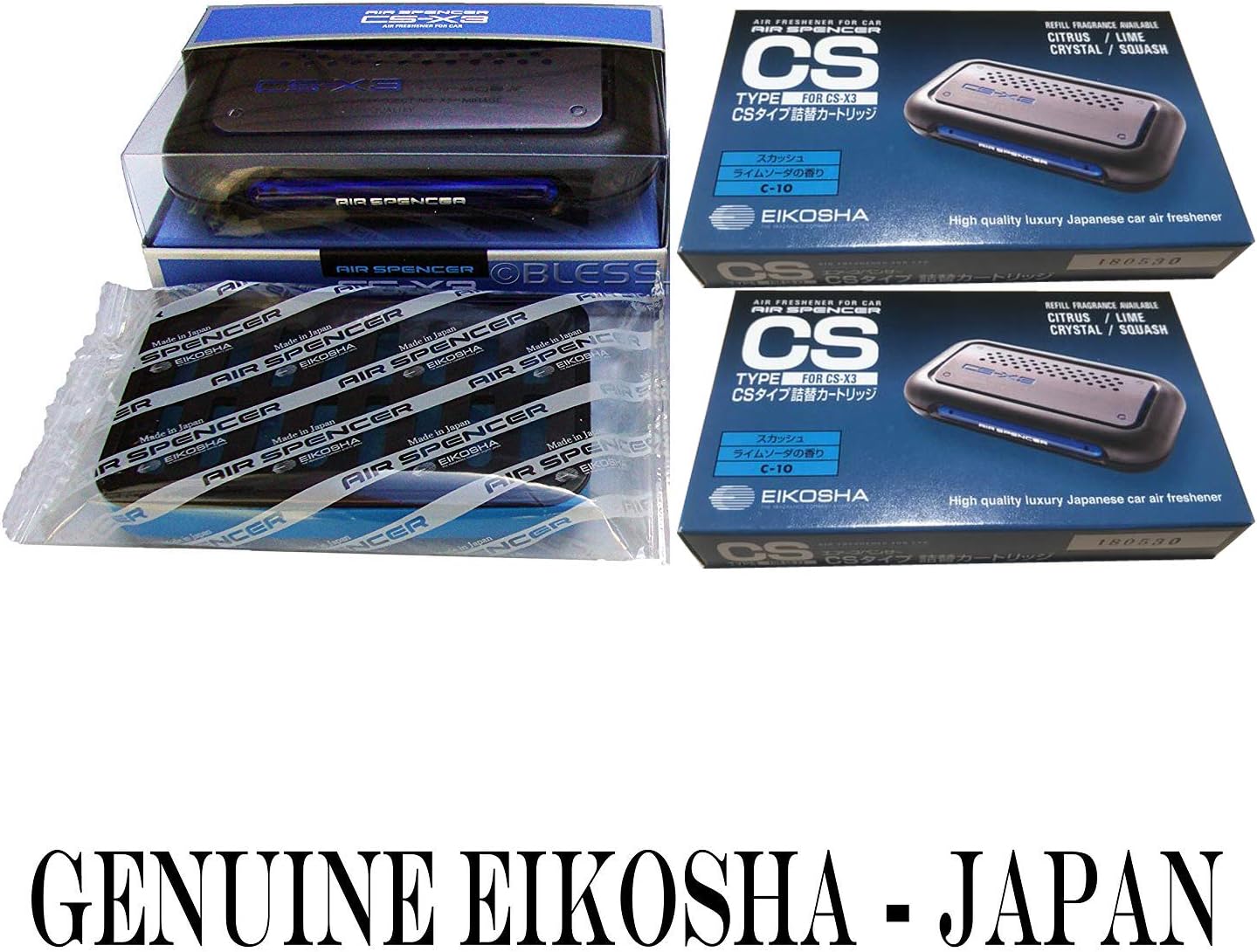
You hang a new air freshener in your car — a cedar-and-leather cartridge, a Little Trees Black Ice, an Air Spencer clip — and for the first three days it’s glorious. Then, somewhere around day four or five, you stop noticing it. Not because it ran out. Not because it malfunctioned. Your nose just… adjusted. This is called olfactory adaptation, or more commonly, nose blindness — the totally normal, totally inconvenient process by which your brain deprioritizes a constant background smell so it can focus on detecting new signals. Your passengers will still smell it. Your freshener is still working. You’ve just been promoted to invisible background noise in your own sensory queue.
The problem is what happens next. Owners who don’t know about this phenomenon either assume the product died and pile on more, or they write a one-star review blaming the brand. Both responses are understandable, and both are avoidable. This guide is the accumulated inside knowledge from experienced owners — the kind that usually only surfaces buried in review comment threads — translated into a practical decision framework for managing scent in your vehicle without accidentally turning your cabin into a sensory assault zone.
Why Your Brain Does This (And Why It’s Actually Useful)
Olfactory adaptation is not a flaw in the system. The Monell Chemical Senses Center, one of the leading independent research institutions focused on smell and taste, notes that olfactory fatigue is an evolutionarily useful feature — constant, non-threatening background smells are neurologically downgraded so your nose stays free to detect changes. A predator, a gas leak, smoke: those are new signals. Your air freshener is not.
The adaptation timeline is faster than most owners expect. Basenotes.net community discussions on nose blindness and fragrance rotation — a recurring topic among fragrance enthusiasts who think carefully about how scent works — consistently describe meaningful adaptation setting in within 20 to 40 minutes of first entering a scented space. In a car cabin (a small, enclosed environment with limited air exchange compared to a room), that process can happen even faster because the concentration builds quickly.
Here’s the trap: the scent is still objectively present at full or near-full strength. The car hasn’t lost any fragrance output. But your subjective experience of it has collapsed to near zero. That disconnect is where most over-scenting mistakes happen.
By the numbers:
- Meaningful olfactory adaptation in an enclosed space: ~20–40 minutes (Monell Chemical Senses Center research on sensory adaptation)
- Typical car cabin air volume: 80–100 cubic feet — roughly 4–5x smaller than an average bedroom
- Owner-reported “I can’t smell it anymore” complaints in aggregated reviews: appear as early as day 3–5 for continuous-use formats like hanging cards and vent clips
The Social Proof Test: The Most Reliable Calibration Tool You Have
Here is a pattern that shows up across owner reviews with striking consistency: the owner stops noticing the scent entirely, then a passenger — a neighbor, a colleague, a first-time rider — immediately reacts to it. An owner of a Creed-inspired cabin diffuser described exactly this dynamic in their long-term review: they had fully stopped perceiving the scent after about a week of daily commuting, then a neighbor got in the car and immediately asked what the smell was. The freshener was performing exactly as rated. The owner’s nose had simply adapted.
This is your most reliable field test: if a passenger notices your scent, your freshener is working, full stop. Your own perception at that point is not a valid data source for whether the product is functioning.
Experienced owners use this knowledge deliberately. Detailing Wiki’s interior odor management guidance echoes the same principle for professional contexts — when detailers assess whether a scent treatment is still active, they prioritize fresh-nose input (their own nose after time away from the vehicle, or a colleague’s first impression) over their in-car perception after extended work time.
The Chemical Guys Black Frost reviewer community surfaces a particularly practical application of this logic: multiple owners report spraying their cabin scent product after they’ve finished driving for the day and then walking away, letting it settle overnight. They evaluate the result when they open the car fresh the next morning — a genuinely cold nose, no adaptation bias. That’s not just a tip; it’s a calibration protocol. If it smells right when you first open the door the next day, the concentration is dialed in.
How to Manage Intensity Without a Lab
The instinct when you stop smelling something is to add more. This is the exact instinct to resist. Overcorrection is well-documented and the consequences are genuinely unpleasant — not just for you, but for anyone who rides with you.
The illustrative extreme: a Little Trees owner, testing a multipack of a high-intensity scent variant, deployed several units simultaneously in a partially enclosed porch space. The scent throw was strong enough to create what they described as an uninhabitable zone. Cars are smaller than porches. The math accelerates.
The practical framework, from owner patterns and Good Housekeeping’s car odor guidance:
-
Don’t adjust intensity while inside the car. Step out, spend 15–20 minutes away doing something else, then return and evaluate on a fresh nose. That’s the only honest read you have.
-
Use output controls if your hardware has them. Refillable diffuser systems — Pura’s vehicle adapter, Onboard Scents cartridge rigs, and similar adjustable-output hardware — exist partly for this reason. Dial down before you layer up.
-
The overnight protocol beats all others. Set your scent level, park for the night, evaluate at first open the next morning. Adjust from there. Repeat until the morning impression is right.
-
Recruit a calibration person. A partner, a friend, a regular passenger — someone who can give you an honest first-impression read periodically. Over time you develop an instinct for what “correctly scented” smells like to them.
-
Don’t stack formats. Running a vent clip and a hanging card and a fabric spray simultaneously is where overcorrection turns into an event. If you’re feeling the need to layer, it almost always means you’ve adapted to the existing scent, not that the existing scent has failed.
Rotation as a Reset: Does It Actually Work?
The short answer is yes, with caveats. The fragrance community on Basenotes.net treats scent rotation as a fairly well-established counter-adaptation technique: by switching to a different scent for a period, you allow your olfactory receptors’ response to the original scent to recover, so when you return to it, you perceive it more fully again.
For car freshener owners, this has a practical translation: keep two or three different scent cartridges or formats in rotation, and swap on a weekly or biweekly basis rather than running a single scent continuously for months.
Air Spencer owners — a brand with a loyal multi-year repeat-buyer community — describe exactly this. One reviewer with more than a decade of Air Spencer use explains the phenomenon explicitly in their long-term notes: they’ve learned not to be alarmed when they stop perceiving the scent, because the car is still scented, and rotating between two or three canisters keeps their perception fresher over a longer ownership arc. For that owner, this isn’t a workaround — it’s just how they use the product now.
There’s a cost dimension to rotation worth naming. Running two cartridges on alternating weeks means your per-unit lifecycle roughly doubles, which can offset the cost of maintaining a small inventory. For premium cartridge formats in the $40–$80 range, that math is worth running before you commit to a single scent subscription.
Car and Driver’s best car air freshener coverage notes that scent fatigue is one of the most common complaints in owner reviews and frequently conflated with product failure — suggesting the gap between how nose blindness actually works and how most buyers understand it is still significant, even among engaged shoppers.
Frequently Asked Questions
How do I know if my car freshener has run out or if I’ve just gone nose blind to it?
The most reliable method is the fresh-nose test: get out of the car for at least 15–20 minutes, then return and open the door before getting in. If you get a scent impression on that first breath, the product is still active. If there’s nothing on fresh-nose entry, it’s likely depleted. For solid or gel formats, physical inspection helps — if the card, cone, or pad has visibly shrunk, darkened, or dried to nothing, that’s a clear signal. For vent clip refills, weight is your proxy: a depleted cartridge will be noticeably lighter than a fresh one.
Is it bad to layer multiple fresheners to compensate?
It’s risky, and experienced owners generally advise against it. The problem is that your nose has already adapted to the baseline scent, so you don’t have an accurate read on how strong the combined output actually is — but your passengers do. Layering multiple formats (vent clip + hanging card + spray) can push cabin concentration well past the point that’s pleasant to a fresh nose, even when it still feels like “not enough” to you. If you feel the need to layer, treat it as a signal to rotate to a different scent rather than to add volume.
How long does it take to go nose blind to a new scent?
Research from the Monell Chemical Senses Center on olfactory adaptation suggests meaningful desensitization can occur within 20 to 40 minutes in an enclosed environment. In a car cabin — which concentrates scent faster than most rooms — anecdotal owner reports suggest the subjective experience of “I can barely smell it anymore” often arrives within the first week of daily use, sometimes within the first three to five days.
Why does my car smell fine to me but strong to passengers?
Because you’ve adapted and they haven’t. This is the clearest real-world demonstration of olfactory adaptation: continuous exposure in that cabin has downgraded the scent signal in your brain, while your passenger’s nose is encountering it cold and at full perceptual strength. This is also why passengers are your best calibration tool — their reaction is the objective read that you’ve lost access to through familiarity.
Does rotating scents actually help reset your sensitivity?
Yes, meaningfully so. When you switch to a different scent, your olfactory receptors that were fatigued by the original scent begin to recover. After a week or two on a different scent, returning to the original will feel noticeably fresher than if you’d run it continuously. The fragrance enthusiast community at Basenotes.net treats this as fairly settled practice, and long-term car freshener owners report the same pattern independently. Two or three scents in rotation across a month is the approach most frequently described by experienced users as the sustainable long-game strategy.