September 13, 2026 • Mara Voss • 11 min reading time • Prices verified June 6, 2026
Little Trees Vent Wraps vs. Hanging Trees: Which Format Wins on Scent, Stealth, and Value
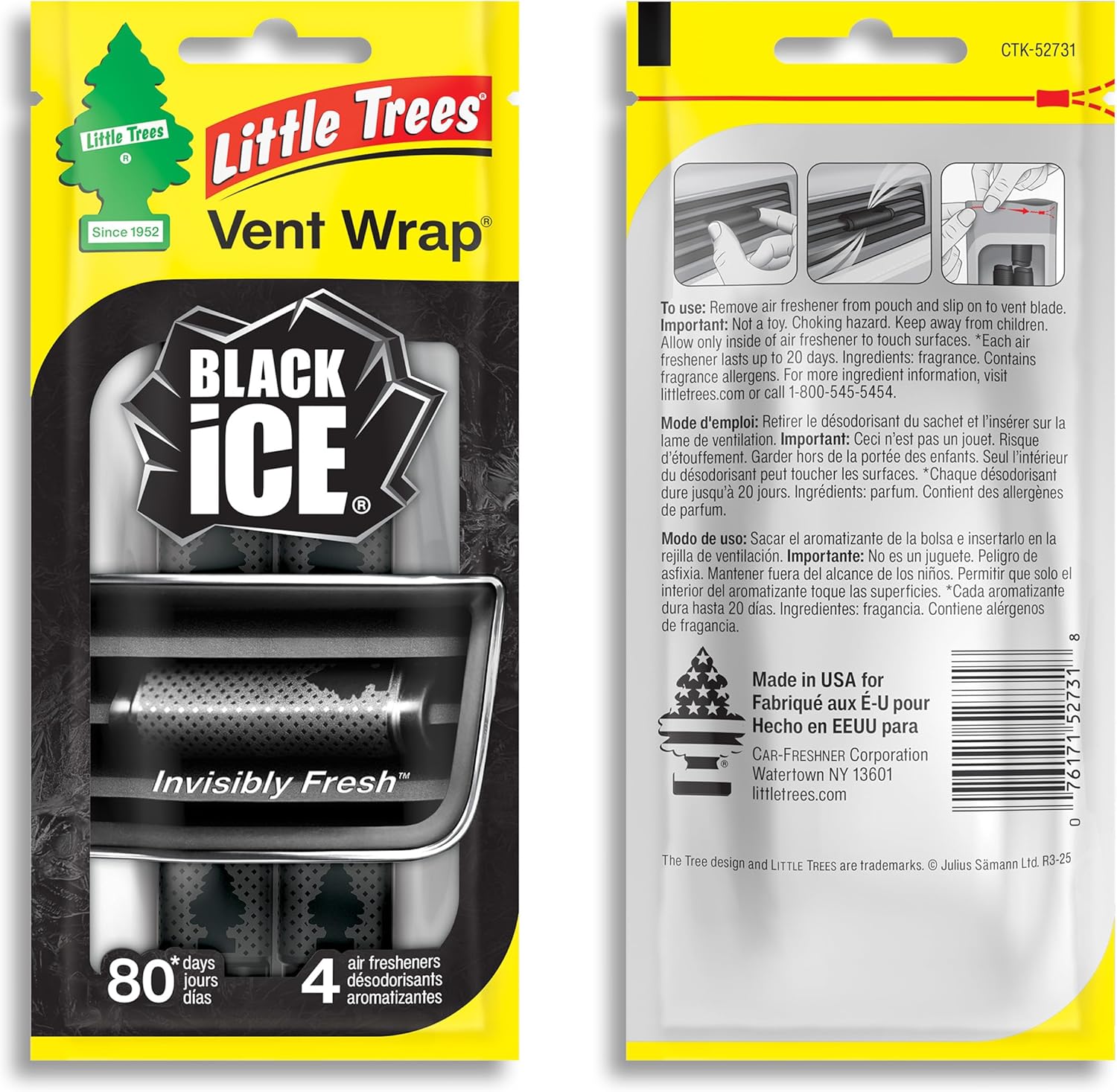
One reviewer said they took the long way home because their car smelled better than their house. They were using a Little Trees Vent Wrap — not the classic pine-tree hanger you’ve seen dangling from every rearview mirror since childhood, but a flat, card-like insert that clips directly onto your HVAC vent, the adjustable louver slats that push conditioned air into your cabin. That single quote cuts straight to the format difference that confuses a meaningful slice of buyers: these products look related, they share branding, and they’re sold in the same aisle — but they release scent in fundamentally different ways. Get it right and you’re taking the scenic route home on purpose. Get it wrong and you’ve got a tree swinging in a parked car, going stale in three weeks.
This article breaks down all three Little Trees formats — the iconic hanging tree, the vent wrap clip, and the Fiber Can — on the axes that actually matter: scent delivery mechanism, longevity, stealth, and honest cost-per-day math. The format confusion driving mismatched expectations is real, and it’s the hidden variable behind a large share of disappointed reviews in this category. Match the mechanism to your driving habits and the product performs. Get that wrong and no amount of Black Ice nostalgia fixes it.
| EDITOR'S PICKLITTLE TREES Car Air Freshener… | Mid-tierLittle Trees Vent Wrap Air Fres… | Budget pickLITTLE TREES Car Air Freshener… | |
|---|---|---|---|
| Format | Hanging tree | Vent wrap | Vent wrap |
| Scent | Black Ice | Black Ice | Caribbean Colada |
| Count | 24 | 16 | 16 |
| Pack count | — | 4 | 4 |
| Home use | ✓ | — | — |
| Price | $18.99 | $11.80 | $9.50 |
| See on Amazon → | See on Amazon → | See on Amazon → |
How Each Format Actually Releases Scent
This is the mechanic most buyers skip, and it’s the reason returns and disappointment cluster around this product category.
Hanging Tree: Passive Diffusion, No Airflow Required
LITTLE
$9.50
In stock on Amazon
Check price on AmazonThe hanging tree uses passive evaporation — cardboard saturated with fragrance oil slowly releases into ambient air. No airflow required. The tree works at idle, in a parked car, overnight in a garage. That’s genuinely useful if you want background scent without the engine running.
The tradeoff: diffusion rate is hard to control. Unwrap the full sleeve immediately and the fragrance floods your cabin, then fades fast. Car-Freshner Corporation’s own packaging instructs gradual unrolling of the sleeve for exactly this reason — most buyers ignore this instruction and then complain the product lasted two weeks instead of four to seven. Good Housekeeping, in their 2025 car air freshener category overview, notes that hanging formats remain the highest-volume seller in the segment precisely because the format is familiar and requires zero installation — but longevity complaints track directly with packaging misuse.
At roughly one to two dollars per unit and an effective cost of three to five cents per day when sleeve-managed correctly, the hanging tree is the clear budget-tier format. It has no installation requirement, no HVAC dependency, and no learning curve beyond the sleeve discipline most buyers skip.
LITTLE
$9.50
In stock on Amazon
Check price on AmazonVent Wrap: HVAC-Dependent, Stronger Active Throw
Little
$11.80
In stock on Amazon
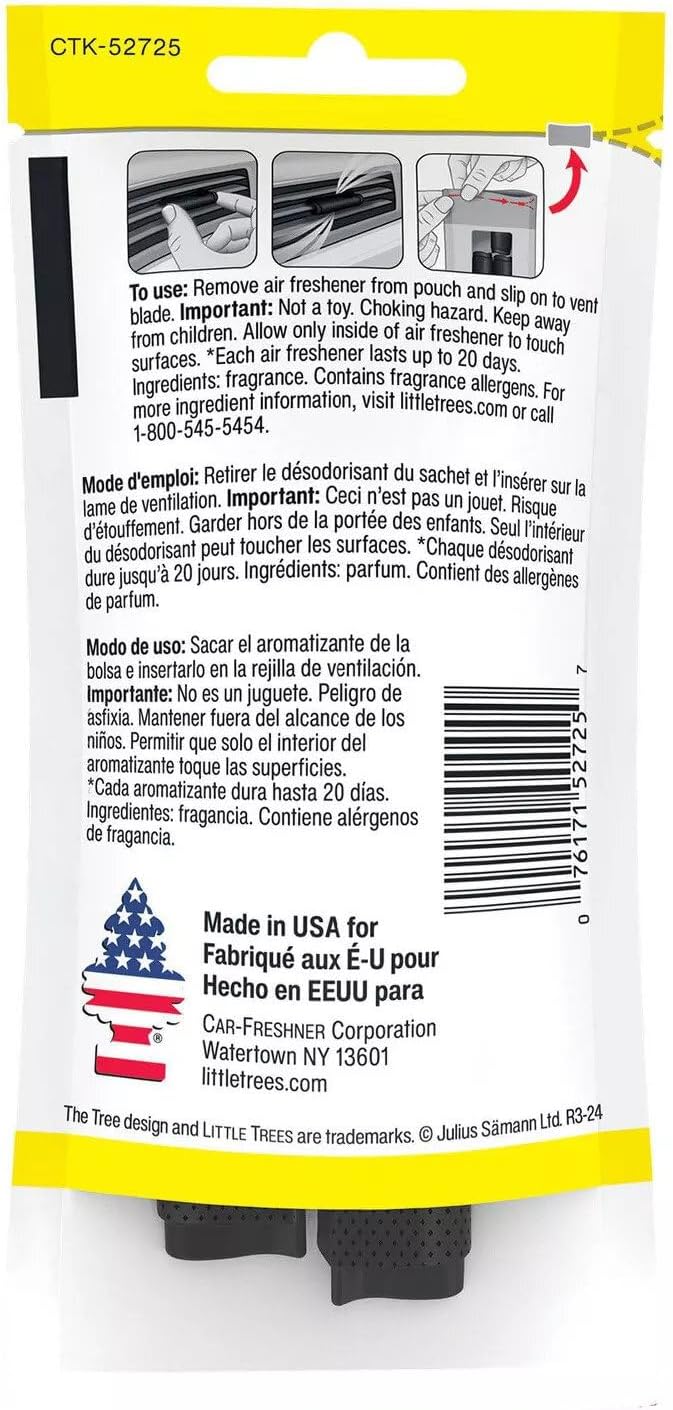
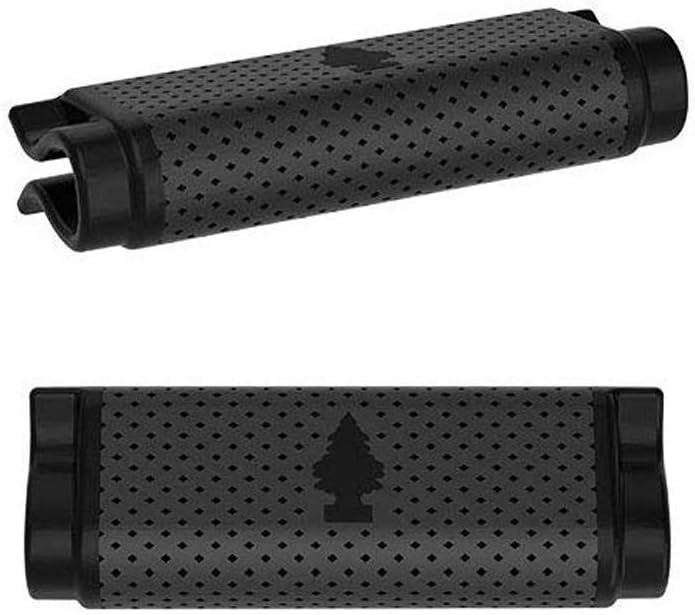
Check price on AmazonVent wraps are designed to work in the airflow path. The fragrance card clips onto your louver slats, and your blower fan carries scent through the cabin. No airflow, minimal scent — this is not a bug, it’s the entire design logic. When the HVAC system is running, scent-throw is noticeably stronger and more evenly distributed than a hanging card generating the same fragrance load.
Reviewers who understand this mechanism consistently rate vent wraps higher than those who don’t. Buyers who purchase vent wraps expecting the passive background scent of a hanging tree come away disappointed in parked conditions. Buyers who understand the HVAC dependency tend to describe the active experience as surprisingly aggressive — in the best sense.
One frequently cited note from community fragrance reviewers: vent wrap clips fit the narrow louver slats common on post-2015 cabin vent designs, which trend toward thinner, angled louvers that reject bulkier aftermarket diffuser clips. If you’re driving a modern vehicle with narrow-slat vents, the vent wrap clip mechanism generally seats more securely than older wide-slat clip formats.
Car and Driver, in their 2025 car air freshener buying guide, recommends single-unit trials before bulk orders specifically because scent intensity is difficult to verify before purchase — advice that applies to every format here but especially to vent wraps, where HVAC usage patterns vary dramatically between drivers.
At two to four dollars per unit and approximately seven to thirteen cents per day over a rated 30-day lifespan, the vent wrap is a mid-tier format: meaningfully more expensive per day than the hanging tree, but delivering more scent-volume per day when HVAC is active.
Little
$11.80
In stock on Amazon
Check price on AmazonFiber Can: Passive Hybrid with Positioning Flexibility
Little
$11.80
In stock on Amazon
Check price on AmazonThe Fiber Can — the cylindrical, mesh-topped format most associated with Black Ice — is a hybrid. It diffuses passively through a mesh top, with optional mild amplification if positioned near an active vent. It’s designed for cupholder or console placement rather than clip mounting, which gives it more placement flexibility than the vent wrap but less active scent-throw.
Scent delivery lands somewhere between the hanging tree and the vent wrap under ideal conditions. At four to seven dollars per unit over a rated 30 to 45-day lifespan, the cost-per-day math is comparable to the vent wrap — but the Fiber Can currently carries a purchasing caveat that warrants its own section.
Little
$11.80
In stock on Amazon
Check price on AmazonThe Black Ice Fiber Can Complaint You Should Know About
Black Ice is Little Trees’ biggest SKU by name recognition. A consistent pattern of community fragrance reviewers and aggregated retailer review commentary — active since approximately late 2023 — surfaces a credible complaint: long-term Black Ice buyers report a meaningful reduction in scent throw from the Fiber Can format specifically. One reviewer’s language — that the product no longer diffuses unless held directly under the nose — is extreme but echoes a pattern across multiple independent accounts.
This is worth naming plainly. Whether the change reflects a formula adjustment, a raw material substitution, or batch inconsistency is not publicly confirmed by Car-Freshner Corporation as of May 2026. The complaint is specific enough — long-term users, same SKU, sudden drop in performance — to flag as a purchasing caveat rather than noise.
The hanging tree and vent wrap versions of Black Ice do not carry the same volume of formula-complaint commentary. The issue appears Fiber Can-specific based on current aggregated review patterns. The practical mitigation is simple: buy a single unit before committing to a multipack. Car and Driver’s 2025 buying guide’s single-unit trial recommendation applies here exactly.
Format Comparison: Scent, Longevity, Cost, and Stealth
Scent Delivery and Longevity Side by Side
| Format | Passive Scent (Engine Off) | Active Scent (HVAC On) | Rated Longevity | Avg. Unit Cost |
|---|---|---|---|---|
| Hanging Tree | Strong | Moderate | 4–7 weeks (sleeve-managed) | $1–$2 |
| Vent Wrap | Minimal | Strong | ~30 days | $2–$4 |
| Fiber Can (Black Ice) | Moderate | Moderate | 30–45 days | $4–$7 |
Cost-per-day math: A sleeve-managed hanging tree runs approximately three to five cents per day. A vent wrap lands around seven to thirteen cents per day but delivers significantly more scent-volume per day when HVAC is active. The Fiber Can, at its rated longevity, is cost-comparable to the vent wrap but is currently carrying the formula-complaint asterisk discussed above.
Stealth and Cabin Aesthetics
For drivers who care about cabin presentation — and readers of this site skew heavily toward people who do — the hanging tree is the most visible format and has the weakest case for use in a detailed interior or a client vehicle. It is a paper tree on a string. That is not snobbery; it is a clear-eyed read on what it signals inside a finished cabin.
Vent wraps are substantially stealthier. The card sits flat against the vent face, partially obscured by the louver slats. From the driver’s seat, the packaging reads as a vent accessory rather than a traditional air freshener. Apartment Therapy, in their 2024 roundup of car scenting options, specifically called out vent clip formats as the preferred choice for drivers seeking discretion — their framing was that the format “doesn’t scream air freshener.”
The Fiber Can, sitting in a cupholder, is visible but contextually neutral — it reads as a canister rather than a classic hanging freshener, which is a minor aesthetic upgrade over the hanging tree format.
For professional detailers and mobile car-care operators sourcing scents for client vehicles: hanging trees are almost certainly off the table for finished-detail presentation. Vent wraps are usable as a short-term placeholder. But a single Little Trees vent wrap in a client vehicle is a budget-tier finishing touch, not a signature. The premium cabin scenting systems at the forty-to-eighty-dollar tier exist precisely for that use case.
Multipack Economics and the Gifting Use Case
The 24-count hanging tree multipack gets purchased and reviewed differently than single units. The dominant use case framing across aggregated review commentary is gifting — specifically, new car owners receiving a variety-pack sampler. That editorial angle is real and worth naming directly.
If you are buying for yourself as a daily driver, the multipack economics only work if you actively rotate scents and use the sleeve management method consistently from unit one. Most buyers do not. The value math requires you to actually use 24 trees at a managed pace, which takes considerably longer than most buyers anticipate, with later units potentially oxidizing in storage before use.
If you are a detailer buying multipacks for client gifting or leave-behinds, the per-unit cost math is strong and the variety-forward presentation lands well. If you are a single driver buying a 24-count because it seemed like a deal, realistically assess your rotation discipline before committing.
One underreported flexibility noted in community review data: vent wraps work in any environment with a louver slat and an airflow source — not just vehicles. Buyers have reported clipping vent wraps to home HVAC vents and office air handlers with consistent results. The hanging tree does not offer this kind of cross-context flexibility.
Frequently Asked Questions
Do Little Trees vent wraps work when the AC or heat is turned off? Minimally. The format is HVAC-dependent by design. Scent diffuses passively at a very low rate when airflow is off, but the experience is materially weaker than when the blower is running. Drivers who frequently run with the fan off will get significantly less value from the vent wrap than from a hanging tree.
How long does a single Little Trees vent wrap actually last in daily use? Car-Freshner Corporation rates them at approximately 30 days. In practice, reviewers driving in warmer climates or with high HVAC usage report closer to three weeks. Cooler climates and moderate fan use tend to hit or exceed the 30-day rating.
Has the Little Trees Black Ice Fiber Can formula changed? No public confirmation from Car-Freshner Corporation as of May 2026. The pattern of long-term user complaints citing reduced scent throw from the Fiber Can format is consistent enough to treat as a purchasing caveat. Single-unit trial before multipack purchase is the practical mitigation.
Can Little Trees vent wraps fit modern narrow vent slats? Community reviewers confirm fit on narrow-slat modern vent designs. The clip mechanism accommodates most post-2010 cabin louver formats. True flat-vent or screen-style vents without louver slats — found on some electric vehicles — are not compatible and require magnetic or adhesive mounting solutions instead.
What is the core difference between the three formats? Hanging tree: passive evaporation into ambient air, no airflow needed, works parked. Vent wrap: forced diffusion through HVAC airflow, scent-throw scales with fan speed, minimal output when parked. Fiber Can: passive evaporation through a mesh top, optional mild amplification near a vent, cupholder or console placement. Format choice should follow your driving pattern and parking habits, not just fragrance preference.
The Decision Rule
- You run your HVAC fan most of the time you drive: Vent wrap is your format. It outperforms the hanging tree on active scent-throw and sits cleaner in the cabin aesthetically.
- You drive frequently with minimal fan use, park for long stretches, or want passive scent in a stopped vehicle: Hanging tree, sleeve-managed from the first day. Passive diffusion is the point of this format.
- You want Black Ice specifically and are reaching for the Fiber Can: Buy one before you buy six. The formula-complaint signal is too consistent to ignore on a multipack purchase.
- You are a detailer sourcing a client leave-behind under five dollars: A vent wrap edges the hanging tree on presentation, but acknowledge internally that it is a budget-tier scent solution, not a premium cabin finish.
- You are buying as a gift for a new car owner: The 24-count hanging tree multipack is the culturally legible, variety-forward gift that reviewers consistently frame as exactly that use case.
Format confusion between vent wraps and hanging trees is the hidden variable behind a large share of disappointed reviews in this category. The fragrance name matters less than the mechanism. Match the mechanism to your actual driving habits and the product performs as rated.