September 3, 2026 • Mara Voss • 10 min reading time • Prices verified June 6, 2026
The Invisible Freshener: Vent Wraps, Hidden Clips, and Low-Profile Options for Minimalist Drivers
Most car air fresheners announce themselves before you even open the door — a cardboard tree swinging from the rearview mirror, a bulky plastic clip jutting out of a dashboard vent like a tiny piece of industrial equipment. If you’ve ever thought “I want my car to smell good, not look like a gas-station gift shop,” you’re the exact driver this guide is written for. Low-profile fresheners solve this by either wrapping around the vent louvers themselves (so they’re nearly invisible from the driver’s perspective) or using a slim, design-forward clip that reads more like car hardware than air freshener. The trade-off is real: you typically get a lighter scent throw and a shorter lifespan than a full-size hanging freshener. Whether that trade is worth it depends on how strong a scent you actually want and how much the aesthetic overhead of traditional formats bothers you. This guide works through both categories in detail — wrap formats first, then low-profile clips — and closes with a clear decision framework.
The Vent Wrap Format: What It Is and Why Drivers Choose It
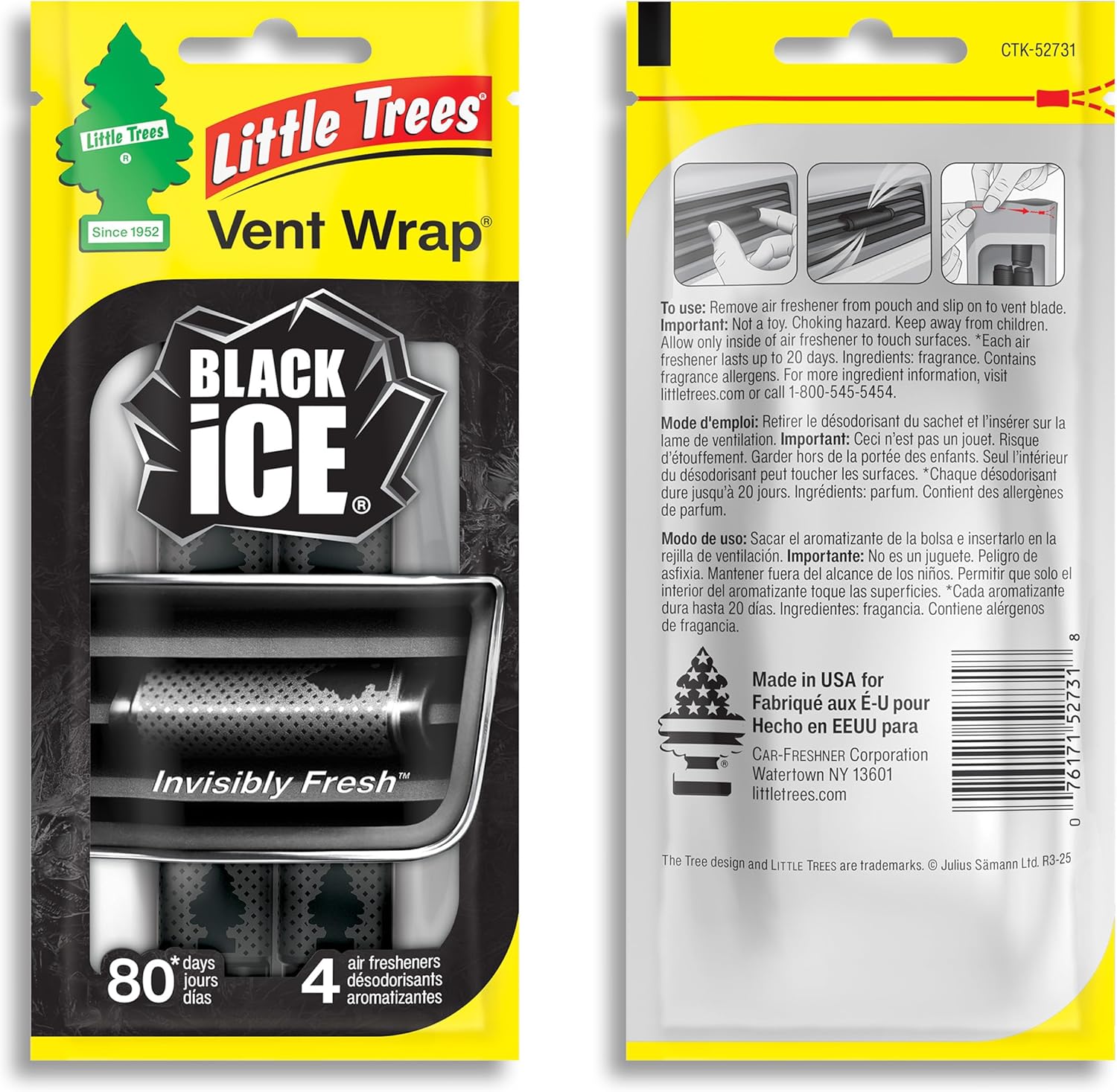
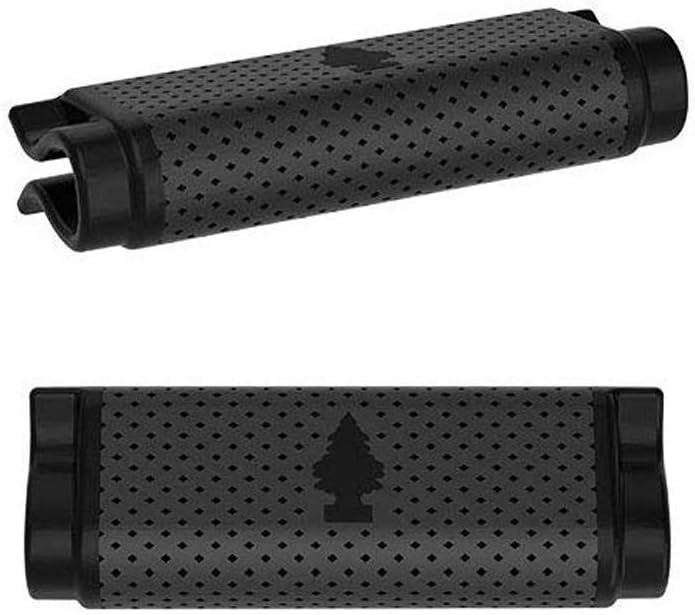
A vent wrap (Little Trees Vent Wraps being the dominant mass-market example) is a scented fabric sleeve that slips over a vent louver blade rather than clipping onto it. From the driver’s seat, it disappears. From a passenger’s eye-line, it’s barely visible. That invisibility is not a minor marketing note — across the full review corpus for Little Trees Vent Wraps covering Vanillaroma, Black Ice, Caribbean Colada, New Car Scent, and Fresh Linen variants, it is consistently the primary stated reason for purchase. Reviewers are not buying these because they’re particularly excited about the scent; they’re buying them because they actively dislike the visual footprint of every alternative they’ve tried.
One Vanillaroma reviewer captures the use case precisely: her son dislikes car fragrances, and the wrap format’s subtle scent output functions as a household peace-keeping strategy, not a fragrance compromise. That’s a legitimate and underserved niche — low-throw freshening where the goal is “not noticeable to someone who doesn’t want to notice it,” rather than “fill the cabin with X scent.”
Scent throw calibration by variant: Caribbean Colada reviewers consistently report that the scent opens slightly strong for the first day or two and then settles into a lighter background presence. If you’re sensitive to the initial blast, let a new wrap air out for 30–60 minutes outside the car before installing. Black Ice reviewers note the scent is perceptibly lighter in wrap format than in the hanging tree — a useful data point covered in detail in the FAQ section below.
The 80-Day Longevity Question — Answered Definitively
This is genuinely unresolved in the buyer community, and one reviewer explicitly describes planning to test whether the “80 days” claim means per individual wrap or per 4-pack. Here is the answer based on manufacturer product specifications:
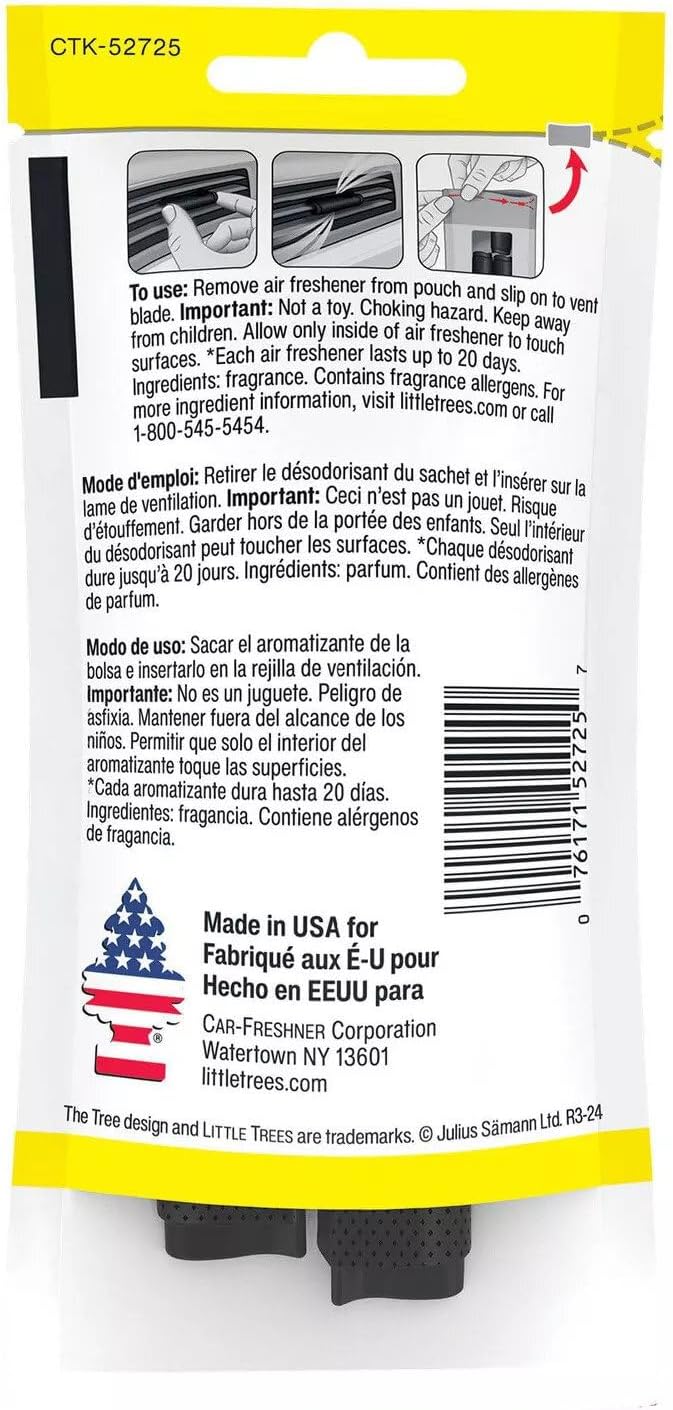
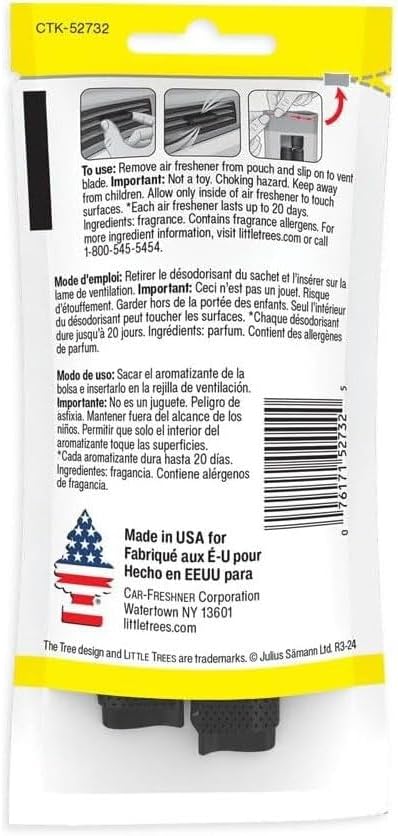
The 80-day rating applies to the full 4-pack used together, not to a single wrap. Each individual wrap in a standard 4-pack is rated for approximately 20 days of use. If you install all four simultaneously across four vent louvers, the combined system is rated to last around 80 days. If you install one at a time in rotation, you’re looking at roughly 20 days per wrap before scent output drops noticeably.
By the numbers — Little Trees Vent Wrap longevity math:
| Configuration | Wraps Active | Effective Duration | Daily scent cost (4-pack ~$6) |
|---|---|---|---|
| All 4 installed at once | 4 | ~80 days | ~$0.075/day |
| 1 wrap at a time, rotated | 1 | ~20 days per wrap | ~$0.075/day |
| 2 wraps installed | 2 | ~40 days | ~$0.075/day |
The daily cost math is actually identical regardless of configuration — you’re spending roughly the same per day either way. What changes is scent throw: four active wraps simultaneously will produce noticeably more fragrance than one. If you want the subtlest possible output (the peace-keeping scenario above), run one wrap at a time.
LITTLE
$9.50
In stock on Amazon
Check price on AmazonLow-Profile Clips: Aesthetic-First Buyers and the Propeller Format
The propeller-style vent clip — represented most recognizably by Little Trees’ Propeller Clip — operates on a completely different buyer psychology than the wrap. Reviewers are candid in a way that’s actually useful: the majority bought it for the looks and were genuinely surprised to find the fragrance performance was competitive with conventional clips. That “aesthetic first, fragrance second” motivation is worth taking seriously rather than treating as a knock against the format.
Per the buyer review corpus for the Little Trees Propeller Clip, the most common summary is some version of: “I expected it to smell okay and look great; it actually does both.” That’s a low-bar expectation that the product clears. What it doesn’t do is out-perform a full-size clip on raw scent throw — owners consistently report a lighter, more diffuse fragrance presence, which, again, is a feature for some drivers and a limitation for others.
Why the design works mechanically: The propeller format positions the scent cartridge at the base of the clip rather than in a large exposed housing, which keeps the visual profile slim. Air moving through the vent blades still contacts the cartridge, so diffusion is passive and consistent — the same mechanism as any clip, just with a smaller scent surface area.
Good Housekeeping’s car air freshener buying guide (2025 edition) notes that clip-based diffusers that reduce cartridge surface area in favor of aesthetics consistently trade peak scent throw for longevity consistency — the scent doesn’t spike and fade as dramatically because less surface is exposed at once. That’s a reasonable description of what propeller-style reviewers report in practice.
Little
$11.80
In stock on Amazon
Check price on AmazonDesigner-Adjacent and Premium Low-Profile Options
For the detail-oriented driver treating the cabin as an extension of personal aesthetic, the mass-market wrap and propeller formats have a ceiling. The fragrance community at Basenotes.net has ongoing threads comparing inspired-by car scent formats and premium vent-mount hardware, and the consistent observation is that the interesting work in the low-profile space is happening at artisan and premium-tier hardware brands, not in the cardboard-and-plastic mass market.
Vitalize Scents and Onboard Scents both produce slim vent-mount hardware with refillable cartridges designed to disappear into modern interiors. The hardware investment (typically $40–$80) is the one-time cost; the refill economics are where the ongoing spend lives. If you’re running a vehicle with flat, frameless vents — common in current Tesla models and several other EVs — standard clip-on formats can be a fitment problem. Onboard Scents in particular has documented compatibility with flat-vent interiors, and reviewers on fragrance forums note it as one of the few premium options that doesn’t require a vent adapter.
Car and Driver’s cabin air quality and ventilation overview (2024) notes that modern cabin ventilation systems move significantly more air per minute than vehicles from even ten years ago — which means diffusion from a small scent surface is faster and more even than the same format would produce in an older car. This is worth knowing if you’re calibrating expected throw from a low-profile format: in a 2022 or newer vehicle, a single vent wrap or slim clip may cover the cabin more effectively than you’d expect from its physical size.
LITTLE
$12.33
In stock on Amazon
Check price on AmazonMaking the Decision: If X, Then Y
If you’ve read this far, you’re likely in one of a few distinct positions. Here’s the decision tree:
If your primary driver is invisibility and you want the lightest possible scent throw — Little Trees Vent Wraps, one wrap installed at a time, is the correct pick. It is genuinely the lowest-profile mass-market option available, the daily cost math is under $0.08, and the subtle output is a feature, not a flaw. Accept that you’re trading fragrance performance for aesthetics.
If you want a visible-but-tasteful clip that reads as car accessory rather than air freshener — the propeller-clip format is the right trade. Owners are consistently satisfied with fragrance output relative to expectations, and the design-forward format holds up in modern interiors. Expect lighter-than-standard throw.
If you’re in a 2020+ vehicle with flat or frameless vents — verify clip compatibility before buying any vent-clip format. The propeller and standard clip designs assume traditional louvered vents. For flat-vent interiors, look explicitly for flat-vent-compatible hardware; Onboard Scents is one of the few premium options with documented fitment for this configuration.
If you’re a professional detailer or mobile car-spa operator sourcing for client vehicles — the wrap format is actually well-suited for client delivery: it’s nearly invisible, the scent is subtle enough that clients with fragrance sensitivities are less likely to react, and the daily cost at volume is minimal. The longevity math (20 days per wrap) means a 4-pack per vehicle gives you roughly 80 days of maintenance-free freshening. For premium clients expecting a branded experience, step up to a refillable system from Vitalize Scents or Onboard Scents — the hardware stays in the vehicle and you swap refills at each service visit.
Detailing Wiki’s overview of cabin odor management notes that low-surface-area diffusers placed at active vent points are the preferred format for professional detailers specifically because they deliver consistent, non-overwhelming output rather than the sharp spike-and-fade cycle of exposed gel or liquid formats. That aligns precisely with what wrap and slim-clip reviewers report from everyday use.
Frequently Asked Questions
Do Little Trees Vent Wraps actually block any airflow through the vent? Based on the physical design — the wrap slides over a single louver blade, leaving adjacent blades open — airflow reduction is negligible for normal use. Reviewers consistently report no noticeable change in cabin ventilation. If you covered every blade of every vent simultaneously, you’d have a theoretical restriction, but in typical single-wrap or dual-wrap installations, this is not a meaningful concern.
Does the wrap stay on at highway speeds or fall off? Reviewers across multiple scent variants report secure retention at highway speeds. The wrap fits snugly around the louver blade and relies on friction, not adhesive. The occasional report of slippage correlates with vents that have unusually smooth or tapered blade edges; standard louvered vents hold without issue.
Is the Black Ice vent wrap scent the same strength as the Black Ice hanging tree? No, and this matters. The Basenotes.net fragrance community and the Little Trees Vent Wrap buyer review corpus both confirm that the wrap format produces a noticeably lighter throw than the hanging cardboard tree, even in the same scent. The Black Ice profile — a woody, slightly ozonic cold-weather scent — is recognizable in wrap format, but significantly more subtle. If you want Black Ice at full strength, the hanging tree remains the reference format.
How do you replace the scent pads on propeller-style vent clips? The Little Trees Propeller Clip uses a replaceable cartridge at the clip’s base — the outer housing unsnaps to allow cartridge removal and replacement. Replacement cartridges are sold separately. The mechanism is straightforward: no tools required, and the housing snaps back securely. Owners report the replacement process takes under a minute once you’ve done it once.
Can you use vent wraps and a vent clip at the same time without overdoing the scent? Yes, but with calibration. The wrap format’s intentionally light throw means layering it with a standard clip creates a combined output that’s roughly equivalent to one standard clip alone — the wrap adds presence without dramatically amplifying the total. Where you’ll want to be careful is pairing a wrap with a high-throw clip format (like a gel-based or oil-wick clip); that combination can tip into overwhelming territory in a small cabin. Reviewers who double up consistently recommend matching light-throw formats with other light-throw formats.