September 17, 2026 • Mara Voss • 9 min reading time • Prices verified June 6, 2026
Drift Wood vs. Stone vs. Metal Vent Clip: Every Format from One Brand Compared

If you’ve ever climbed into a car and been hit with a scent so sharp it made you wonder if something leaked, you’ve experienced what Drift owners call “the first week.” Drift is a car fragrance brand that sells refillable diffuser clips — devices that attach to your vehicle’s air vent louvers and release fragrance as cabin air passes through them. The concept is cleaner and longer-lasting than a paper tree dangling from your mirror. What makes Drift unusual in this category is that they’ve built three distinct hardware formats — Wood, Stone, and Metal — all designed to accept the same family of scent refill blocks, but with meaningfully different build materials, aesthetics, and (based on owner reports) real-world diffusion performance. If you’re trying to decide which format to buy — or whether Drift is worth choosing over a generic vent clip from the big-box aisle — this breakdown covers every angle.
| EDITOR'S PICKDrift Car Air Freshener - The O… | Mid-tierDrift Car Air Freshener - The O… | Budget pickDrift Car Air Freshener - Wood… | |
|---|---|---|---|
| Format | Stone | Wood | Wood |
| Pack Type | 3 Pack Refill | 3 Pack Refill | Starter Kit |
| Scent | — | Teak | Teak |
| Clip Material | Metal | Metal | — |
| Essential Oils | ✓ | ✓ | — |
| Price | $39.95 | $29.95 | $12.95 |
| See on Amazon → | See on Amazon → | See on Amazon → |
What You’re Actually Choosing Between
Drift’s lineup breaks into three hardware formats before you even get to scent selection:
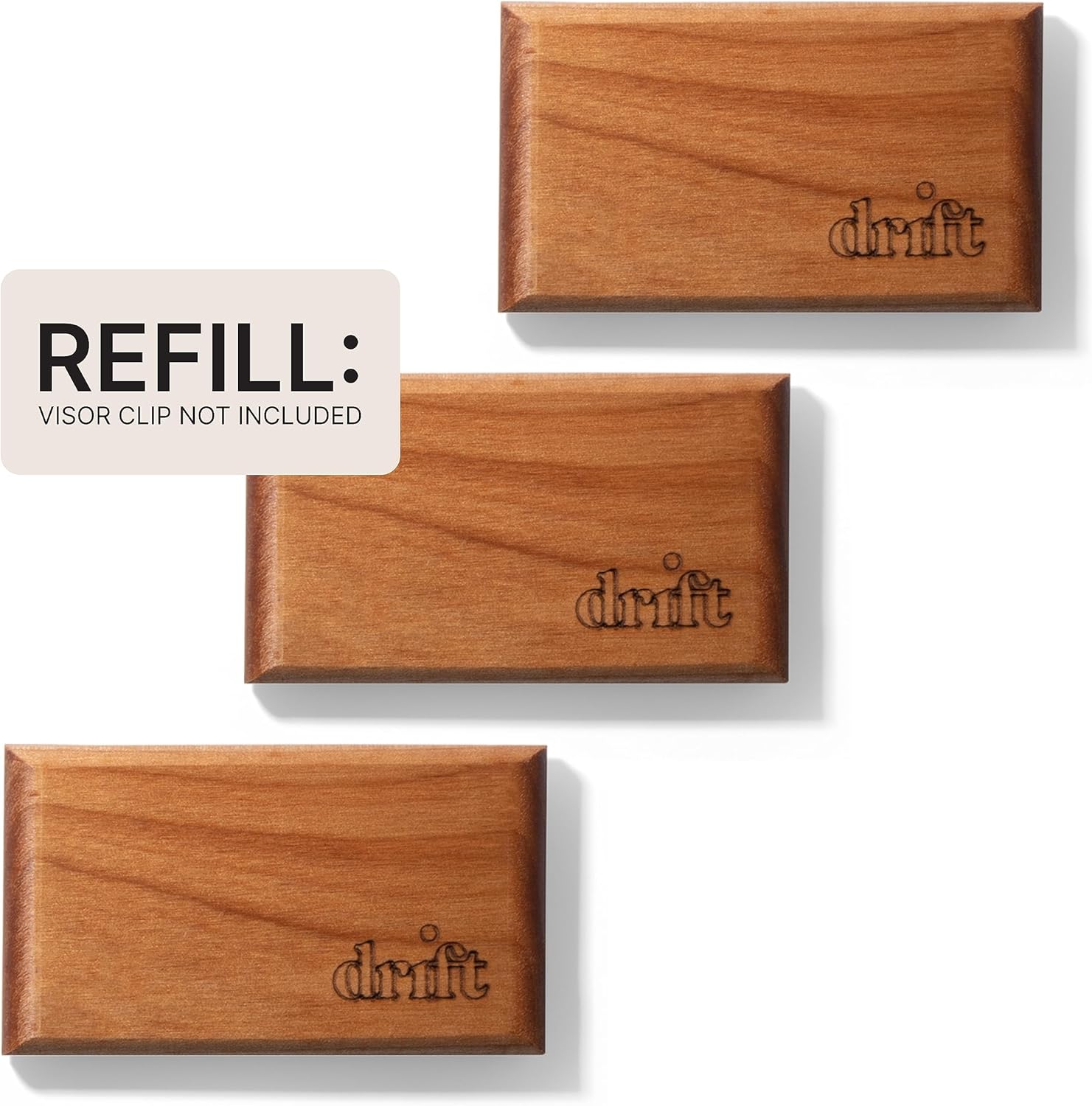
- Wood format — a natural wood housing holding a scented block, clipped to standard vent louvers. The organic material aesthetic is the primary differentiator.
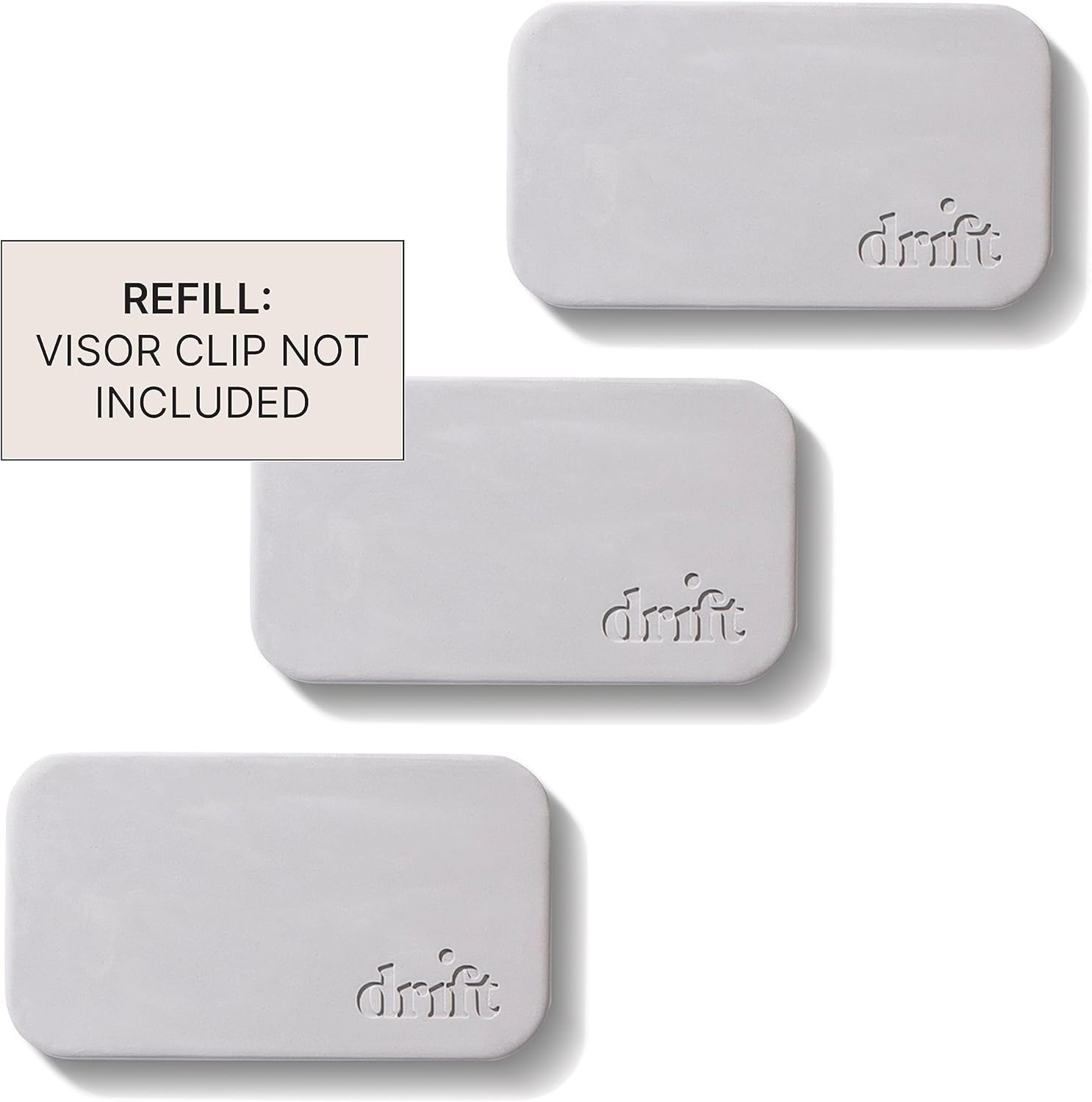
- Stone format — same clip-to-vent concept, same scent block system, but with a stone or ceramic-style housing that reads more minimal and architectural.
- Metal Vent Clip — the newest addition, positioned as the premium tier with a metal housing, but with an internal geometry that affects airflow in a way owners consistently flag as problematic.
All three are passive diffusers. None require batteries or a USB connection. The airflow from your HVAC system does the work. That simplicity is core to the appeal — and it’s also where format differences matter most, because passive diffusion lives or dies on housing geometry.
Owner-reported performance summary across aggregated reviews:
| Format | First-week intensity | Settle-down period | Diffusion complaints | Refill price advantage (brand site vs. third-party) |
|---|---|---|---|---|
| Wood | High | ~5–10 days | Rare | ~40–50% cheaper via Drift site |
| Stone | High | ~5–10 days | Rare | ~40–50% cheaper via Drift site |
| Metal | Moderate (in isolation) | N/A | Frequent | ~40–50% cheaper via Drift site |
Format-by-Format Breakdown
### Drift Wood: Warm Material, Proven Performance
The Wood format is where most Drift buyers start, and the owner experience arc is consistent enough to treat as reliable. The first five to ten days are aggressive — the scent block releases at high intensity while the surface is fresh, and in a sealed cabin that concentration can feel overwhelming. Owners who return the product during this window are giving up before the format delivers what it’s actually designed for.
The Basenotes.net community has documented this pattern across multiple passive vent diffuser brands: absorptive scent blocks release most aggressively early in their lifespan, when the block surface hasn’t yet developed the diffusion-moderating skin that comes with use. The physics apply to Drift Wood the same way they apply to any block-based passive system. Drift’s scent concentration appears to sit on the higher end of the category, which makes the first-week effect more pronounced.
Scent accuracy for available options:
Owners consistently describe Amber as woody and powdery rather than gourmand — resinous warmth rather than food-adjacent sweetness. If you want a cabin scent that reads expensive rather than edible, Amber is the right call. Cabana reads as coconut and tropical fruit — lighter, summery, and broadly inoffensive. For detail shops handing vehicles back to clients, Cabana is the safer crowd choice.
The Wood housing is visually warm and textured. It works well in interiors with wood trim, tan leather, or other natural-material cues. It does not disappear into a black-on-grey modern cabin — it’s meant to be seen, and that’s either a feature or a drawback depending on your interior.
Drift
$12.95
In stock on Amazon
Check price on Amazon### Drift Stone: Minimal Aesthetic, Equivalent Performance
Stone delivers nearly identical functional output to Wood. Owner reports across both formats describe the same intensity arc, the same settle-down timeline, and the same eventual appreciation for the mellowed scent. The Fragrantica community’s discussions of passive diffuser blocks confirm that housing material — whether wood or stone — has minimal effect on fragrance output when the internal geometry is equivalent, which it appears to be between these two formats.
What Stone offers is a cleaner visual profile. The housing reads architectural rather than natural — the kind of object that disappears into a modern interior without demanding attention. If your cabin is black, grey, or brushed silver, Stone reads as intentional. If you’re running a detail shop with a mixed client base, Stone is also the less polarizing choice for vehicle interiors you didn’t design yourself.
The practical question of refill compatibility: owner experience suggests the scent blocks are interchangeable between Wood and Stone formats, since both use the same block system. No significant compatibility complaints surface in aggregated owner reviews. That said, Drift has not published explicit cross-format compatibility documentation, so verify directly with the brand before committing to a bulk refill purchase across formats.
Drift
$29.95
In stock on Amazon
Check price on Amazon### Drift Metal Vent Clip: A Real Diffusion Problem
This is where the format comparison gets harder, and the news is not good for the Metal Clip. The format is positioned as a step up — metal housing, more refined presentation — but owner reviews surface a consistent and specific complaint that no other Drift format generates: the scent block smells strong when held in isolation, but the housing fails to disperse that scent into the cabin when clipped to the vent.
This distinction matters. “Scent is weak” is a concentration problem. What owners describe here is an architectural failure — airflow isn’t moving through the housing in a way that carries fragrance molecules into the cabin. One explicit 1-star owner review captures the pattern precisely: the block smells fragrant in hand, nothing detectable once installed.
Good Housekeeping’s editorial coverage of car air freshener mechanics notes that passive vent diffusers depend entirely on airflow path geometry — the housing must direct cabin air across or through the scented medium to pick up fragrance. If the internal structure routes air around the block rather than through it, diffusion fails regardless of how concentrated the fragrance itself is. Detailing Wiki’s entry on cabin odor control and scent diffusion echoes this principle, noting that housing design is the single most important variable in passive diffuser performance, ahead of fragrance concentration or block quality.
That is the working explanation for what’s happening with the Metal format. The block performs. The geometry doesn’t direct airflow across it effectively. Until Drift issues a revised version with corrected internal geometry and owners confirm the fix, the Metal format is the one to avoid at full price.
Drift
$39.95
In stock on Amazon
Check price on AmazonThe Refill Price Gap You Need to Know Before You Buy
Across all three formats, one pattern surfaces in owner reviews consistently enough to treat as a verified finding: Drift’s own website sells refill blocks and starter kits for roughly 40–50% less than third-party retailers list them.
This matters more than it might appear. Drift’s business model is refillable — the hardware is the entry point, and refills are recurring. Paying full third-party retail on refills over six months or a year meaningfully changes the cost-per-day math relative to disposable alternatives.
Detailing Wiki’s coverage of cabin scent systems specifically flags this dynamic: refillable diffuser systems only outperform disposables on total cost if the refill sourcing is managed well. Paying a significant markup at the refill stage erodes the advantage that a refillable system is supposed to provide.
The practical move: Buy hardware wherever is most convenient for your initial purchase. Source refills directly from Drift’s own website. The savings are owner-confirmed, consistent across independent reports, and compound over time.
Frequently Asked Questions
Is the first-week intensity from Drift Wood or Stone a defect?
No. Based on aggregated owner reports across both formats, early-stage intensity is expected and consistent. The scent block surface releases more aggressively before it develops the diffusion skin that moderates output over time — a pattern the Basenotes.net community has documented across passive diffuser blocks broadly, not just Drift. Give it ten days before making any return decision.
How long do Drift refill blocks actually last?
Owner-reported duration varies based on HVAC fan speed, climate, and use frequency. Fragrantica’s community discussions of passive diffuser blocks note that high-fan-speed use depletes scented blocks significantly faster than low or intermittent use. Label claims assume moderate use conditions. Expect shorter real-world duration in summer heat or high-fan environments.
Is buying Drift direct always cheaper than third-party?
Consistently, yes, based on multiple independent owner reports. The gap on refills runs approximately 40–50% cheaper through Drift’s own site. There is no good reason to source refills through third-party retailers once you’ve confirmed this gap for your specific refill SKU.
Does the Drift Metal Vent Clip actually diffuse scent into the cabin?
Based on owner reviews, it does not perform reliably. The scent block itself is fragrant, but the housing geometry does not appear to route cabin airflow across the block effectively. This is a design issue, not a fragrance strength issue. The Wood and Stone formats do not generate this complaint. Avoid the Metal format until a revised version with corrected geometry is confirmed by owners.
Can you use Wood and Stone refills interchangeably?
Owner experience suggests yes — the block system appears compatible across both formats. No meaningful compatibility complaints appear in aggregated reviews. Verify with Drift directly before bulk purchasing across formats.
Which Drift scent is closest to a clean, non-synthetic smell?
Owner descriptors consistently position Amber as warm, woody, and powdery — natural-reading rather than sharp or chemical. Cabana reads tropical and fruity, which owners describe as equally fresh. Both are characterized as non-synthetic by owners who’ve moved past the first-week intensity phase. Amber is the more frequently cited “clean but warm” option for buyers who want something that doesn’t smell like a product.
The Decision Frame
If you’re choosing between Drift formats right now, the structure is straightforward:
- Wood vs. Stone is purely aesthetic. Performance is equivalent. Wood for warm or natural-material interiors; Stone for modern or minimal ones. Either is a sound choice.
- Metal is the format to skip. The diffusion failure reported by owners is format-specific, credible, and unresolved as of this writing. The premium positioning isn’t backed by premium performance.
- Regardless of format, buy refills direct. The price gap is real, owner-confirmed, and compounds over the life of the product.
- Plan for ten days before judging. The first-week intensity is the single biggest source of premature returns across all Drift formats. Owners who wait consistently describe the settled scent as the product they’d buy again. The timeline is predictable — use it.
The strongest case against Drift overall isn’t a format issue. It’s that first-week scent wall, which is intense enough to trigger returns before the product has time to become what it’s designed to be. Go in knowing the arc, and the settle-down period becomes the feature that owners keep coming back to. That’s the consistent pattern across a year of independent reports. Ten days. Then decide.