September 9, 2026 • Mara Voss • 10 min reading time • Prices verified June 6, 2026
Drift's Wood vs. Stone Fresheners: Refill Lock-In Costs and Scent Accuracy Tested by the Community
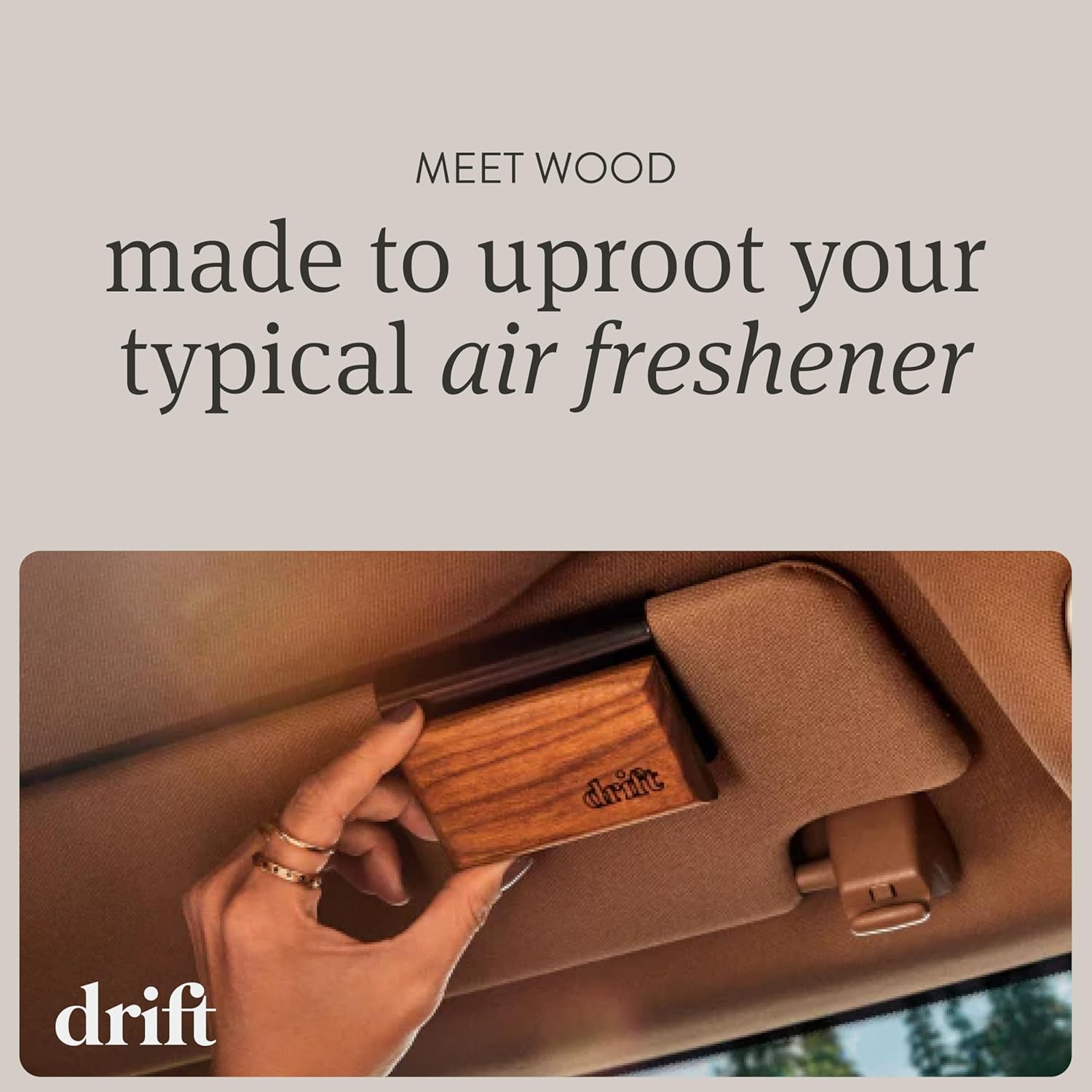
If you’ve landed here wondering what “Drift” is: it’s a small-batch American car fragrance brand that sells two very different products under the same roof. The Wood is a refillable diffuser — a hardware device you mount in your car that uses replaceable scent cartridges to disperse fragrance over time. The Stone is a simpler hanging or placement freshener made from porous volcanic stone, pre-soaked in fragrance oil, no hardware required. Both sit in the $25–$60 range depending on format, which puts them squarely in the “enthusiast tier” — above mass-market hanging fresheners, below the full luxury diffuser systems from premium connected-home brands. This article breaks down what each format actually costs to run over time, how accurate the scents are relative to the designer fragrances that clearly inspired them, and which one makes more sense depending on how you drive and how often you care to think about your car’s smell.
If you’re mid-decision — you’ve already decided Drift is interesting and you’re trying to figure out which Drift — this piece is calibrated for you.
| EDITOR'S PICKDrift Car Air Freshener - The O… | Mid-tierDrift Car Air Freshener - The O… | Budget pickDrift Car Air Freshener - Wood… | |
|---|---|---|---|
| Format | Stone | Wood | Wood |
| Pack | 3-pack refill | 3-pack refill | Starter kit |
| Mount | Metal clip | Metal clip | — |
| Ingredients | Essential oils | Essential oils | — |
| Scent | — | Teak | Teak |
| Price | $39.95 | $29.95 | $12.95 |
| See on Amazon → | See on Amazon → | See on Amazon → |
The Two Ecosystems, Side by Side
The fundamental split between Wood and Stone isn’t just aesthetic. It’s a systems-level difference that determines your ongoing cost, flexibility, and scent throw (how far fragrance diffuses through a space).
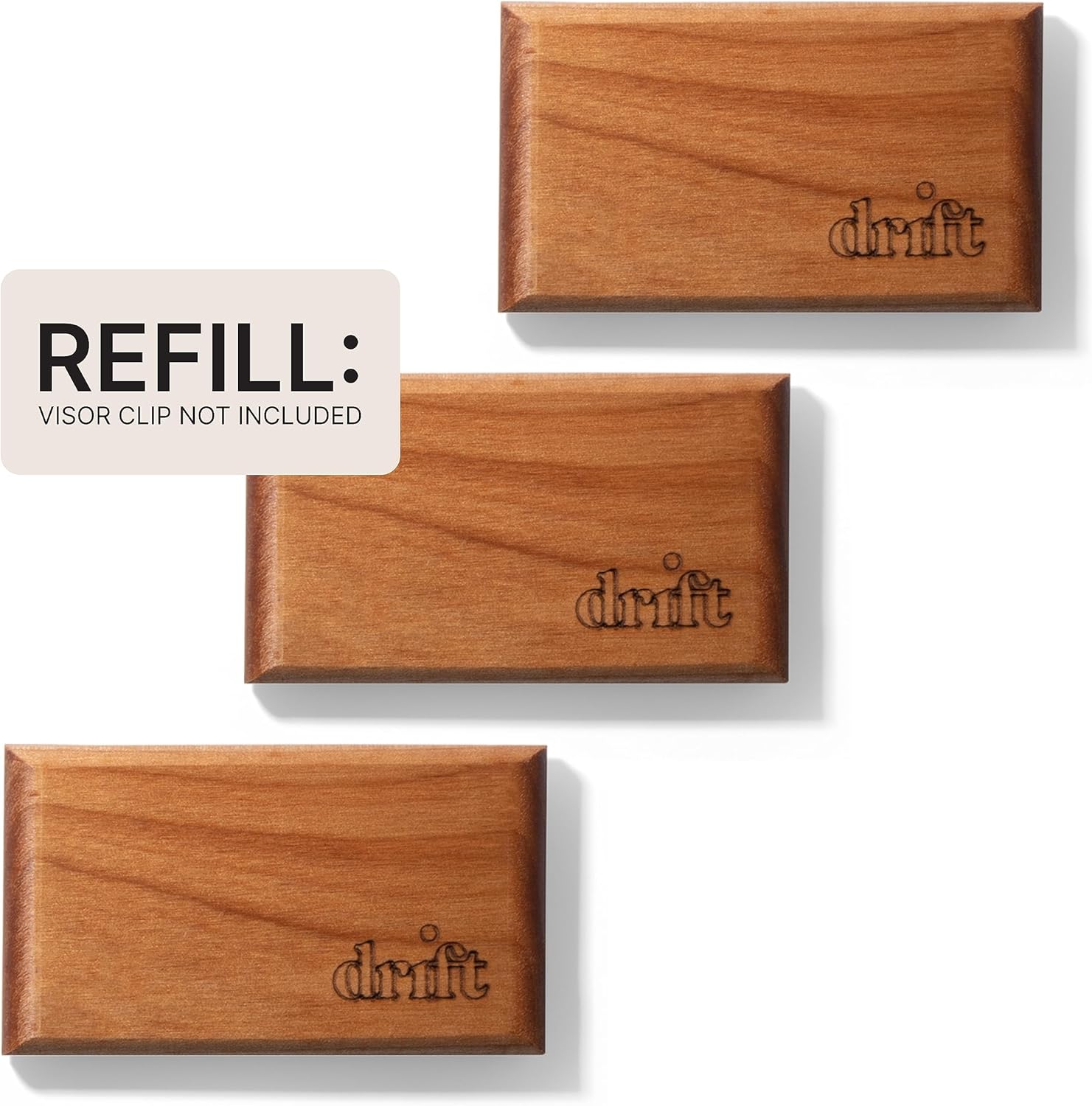
Drift Wood is a USB-powered ultrasonic diffuser — it uses a small vibrating membrane to atomize liquid fragrance and push it into your cabin air. Hardware retails around $45–$55. Replacement cartridges (10ml each) run approximately $18–$22 per unit, with manufacturer estimates of 30–45 days per cartridge at “low” intensity in a standard sedan. That puts your cost-per-day somewhere between $0.40 and $0.73 depending on intensity setting and cabin size.
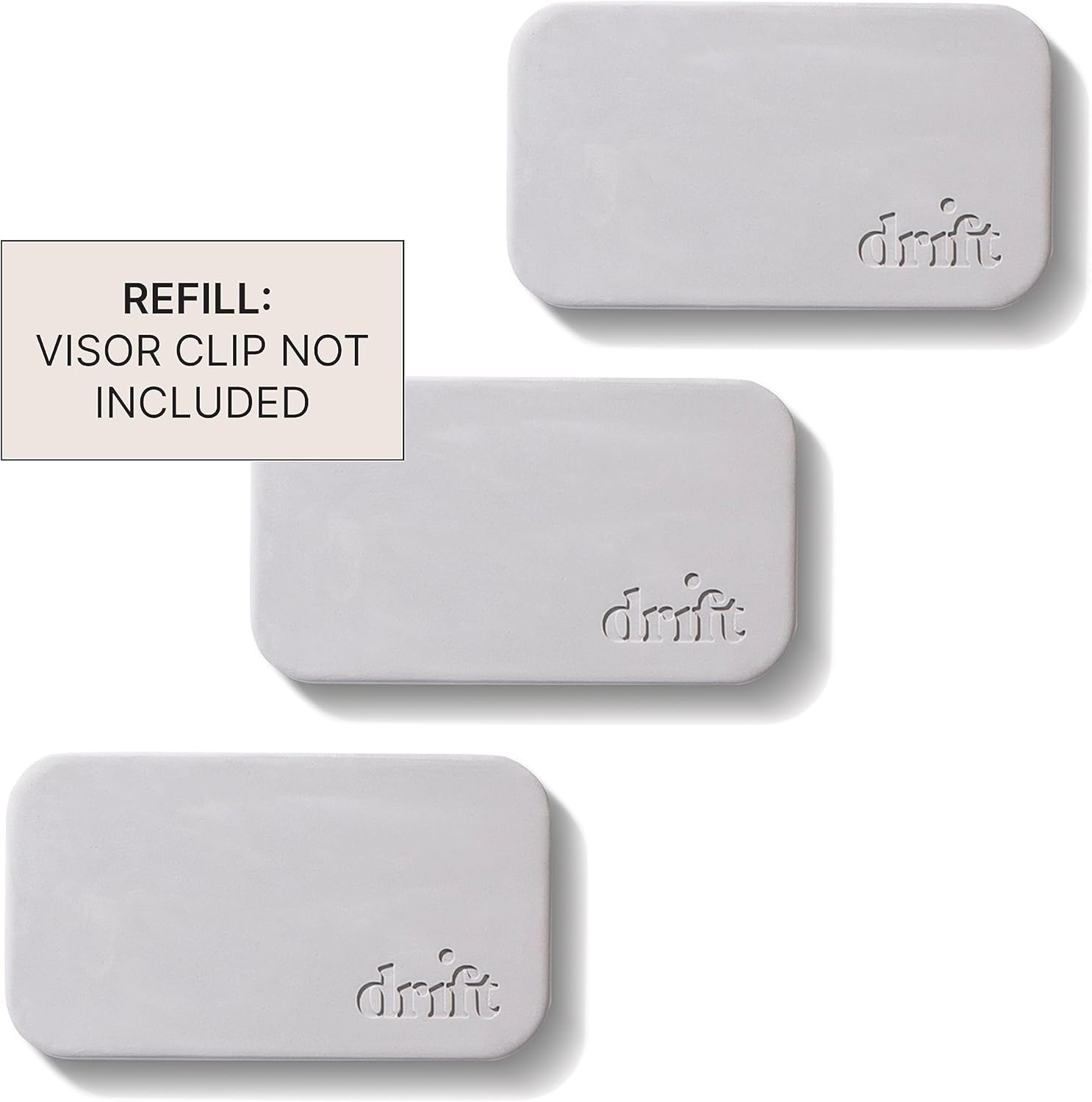
Drift Stone is a passive system: no power, no hardware, just porous volcanic material absorbing and slowly off-gassing fragrance oil. Starter sets run $22–$30 and include the stone plus one fragrance vial. Refill oils retail at $14–$18 per vial, lasting an owner-reported 3–6 weeks depending on climate (heat dramatically accelerates evaporation, which is a real consideration in Sun Belt climates or any dark-parked vehicle in summer). Cost-per-day range: roughly $0.33 to $0.86, with high variability.
By the numbers — 90-day running cost comparison (mid-range estimate):
| Format | Hardware | Refills (90 days) | Total | Cost/Day |
|---|---|---|---|---|
| Drift Wood (low setting) | $50 | $60 (3 cartridges) | $110 | ~$0.61 |
| Drift Stone (temperate climate) | $26 | $48 (3 vials) | $74 | ~$0.55 |
| Drift Stone (hot climate / summer) | $26 | $72 (5 vials) | $98 | ~$0.82 |
The Stone looks cheaper until summer arrives. If you park outdoors in Phoenix or Houston, the Wood’s controlled-intensity dispensing starts to look more economical over a full year.
Comparing the Formats: Three Tiers of Driver Need
Understanding which Drift format wins for you depends heavily on how you prioritize cost, scent fidelity, and installation flexibility. The following three subsections break down the decision by driver profile.
H3: The Budget-Conscious Commuter
For drivers who want a credible fragrance upgrade from mass-market options without committing to significant hardware spend, the Drift Stone is the lower-friction entry point. The $22–$30 starter kit requires no cable management, no USB port, and no learning curve. You place it, you wait, you smell it.
The risk is climate dependency. Community members on Basenotes.net who drive in hot regions — specifically those who park outdoors in summer — report refill consumption running significantly higher than the brand’s stated estimates, which pushes the annual cost toward parity with the Wood despite the lower entry price. For temperate-climate commuters parking in a garage, the Stone’s economics hold up well. For everyone else, the math tightens.
Plain-text sourcing: Basenotes.net, “Drift Wood vs. Stone — long-term impressions” community thread.
Drift
$12.95
In stock on Amazon
Check price on AmazonH3: The Enthusiast Driver Seeking Scent Accuracy
For fragrance-aware drivers whose primary question is “how close does this actually get to the designer reference,” the answer differs by scent family. Aggregated community reviews across Fragrantica’s Drift entry pages and the Basenotes.net long-term impressions thread produce a consistent pattern:
The Drift Wood’s ultrasonic diffusion mechanism preserves top and middle notes better than passive formats. The lighter, more volatile aromatic compounds that give a fragrance its opening character don’t evaporate prematurely before reaching your nose. Community reviewers specifically call out the “Neroli & White Musk” and “Oud & Vetiver” profiles as the most accurate to their apparent designer inspirations. The oud profile in particular draws comparisons — within the context of a cabin environment — to the smoky-sweet character of well-known Replica-line oud-adjacent releases.
The Drift Stone leans warmer and heavier by physics. Its passive format favors base notes — woods, musks, resins — because those heavier molecules linger rather than dispersing quickly. Reviewers consistently rate the Stone higher for gourmand-adjacent and woody profiles, where the warmth of the stone material actually complements the fragrance character. The “Sandalwood & Amber” profile draws particular praise from community members who describe it as a genuine contender among cabin fragrances in the same olfactory neighborhood.
Where both formats fall short: fresh, citrus-forward, and aquatic profiles receive mixed reviews across both systems. Car and Driver’s evaluation of car air fresheners — published in their “The Best Car Air Fresheners We’ve Smelled” roundup — notes this same pattern, observing that ozonic and green top notes are the hardest to translate into a confined cabin environment regardless of diffusion format. Drift’s “Ocean & Driftwood” profile is specifically called out in multiple Basenotes.net community discussions as underperforming relative to the brand’s wood and resin profiles.
Plain-text sourcing: Fragrantica, Drift fragrance entries (community reviews); Basenotes.net, “Drift Wood vs. Stone — long-term impressions”; Car and Driver, “The Best Car Air Fresheners We’ve Smelled.”
Drift
$29.95
In stock on Amazon
Check price on AmazonH3: The Premium Buyer Prioritizing Long-Run Consistency
For drivers willing to pay the hardware premium in exchange for predictable, hands-off scent delivery over a year or more, the Drift Wood is the better long-run investment — with caveats.
The USB-powered ultrasonic system allows intensity control, which means scent output adapts to your preference and doesn’t spike in heat the way passive evaporation does. This matters for consistency: a Stone freshener in a parked summer car can off-gas most of its fragrance load in hours. The Wood dispenses only when powered on and only at the level you set.
The trade-off is ecosystem commitment. Drift’s Wood cartridge system is proprietary — the snap-in format means third-party fragrance oils won’t function without modification, and you’re bound to Drift’s active SKU catalog. As of mid-2026, that catalog covers 12 active scent profiles for Wood cartridges. Community members on Basenotes.net note this is narrower than some competing refillable diffuser platforms but has been expanding year-over-year. If a profile you love gets discontinued, there is no workaround within the hardware.
For EV owners specifically: the Wood requires a USB-A or USB-C port. In vehicles with infotainment-controlled climate systems or limited mount points, the unit sits on a flat surface rather than clipping to a vent. Community owners in EV-focused fragrance discussions note this works functionally but produces a less clean installation than in a traditional vent-clip setup. The Detailing Wiki’s overview of car fragrance systems — “Car Fragrance Systems — Overview and Buyer Notes” — identifies passive stone formats as the most universally cabin-compatible option precisely because they require no power and no vent access. EV buyers should weigh this tradeoff explicitly.
Plain-text sourcing: Detailing Wiki, “Car Fragrance Systems — Overview and Buyer Notes”; Basenotes.net, “Drift Wood vs. Stone — long-term impressions.”
Drift
$39.95
In stock on Amazon
Check price on AmazonRefill Lock-In: What Ecosystem Commitment Actually Means Here
Both formats create soft lock-in — each hardware system works optimally with Drift’s own refills. But the nature of that lock-in differs in a way that matters for multi-year ownership.
The Wood’s USB cartridge system is proprietary by design. If Drift raises refill prices, narrows its catalog, or discontinues a profile you rely on, you have limited recourse without replacing the hardware entirely.
The Stone’s lock-in is softer in practice. The stone itself is just porous volcanic rock — multiple community members on fragrance forums report successfully using third-party fragrance oils and even diluted EdP on the stone with acceptable results. Drift’s official refill vials use a convenient dropper format, but the dropper is not structurally necessary. This gives Stone owners a meaningful exit ramp that Wood owners don’t have.
The decision frame: If you have strong scent preferences and want to experiment or hedge against catalog changes, Stone’s ecosystem is more forgiving. If you prioritize consistent, automated delivery and are willing to stay within Drift’s catalog, Wood is the more reliable long-run performer — provided the profile you want remains available.
The Professional Detailer Angle
If you’re sourcing for client vehicles, neither format is designed for commercial throughput, and per-unit cost doesn’t scale the way commercial-grade scent systems do. That said, the Stone freshener has developed a genuine following among mobile detailing operators as a premium leave-behind. The presentation is clean, the price point reads as a thoughtful touch without being a significant cost center, and the passive format eliminates any client confusion about operating hardware.
Several mobile detailers in Basenotes.net community discussions describe the Stone starter kit as a margin-friendly add-on that photographs well in a finished detail — an important consideration when documentation drives referral business. At $25–$30 per unit, it positions well as a service differentiator in a mid-to-premium detailing tier.
The Wood is less practical as a leave-behind given hardware cost, but some operators report using it in their own work vehicles as a brand-impression tool when clients are present — mobile spa operators in particular, where fragrance environment is part of the service proposition.
The Decision Rules
You’ve read this far because you have a decision pending. Here’s how to frame it cleanly:
If you park indoors in a temperate climate and want set-it-and-forget-it scent consistency: Drift Wood is worth the hardware premium. The controlled dispensing keeps scent throw predictable across seasons, and the catalog covers enough profiles that most buyers find at least two or three they’d run long-term.
If you park outdoors in a hot climate, drive an EV, or want flexibility to experiment with third-party oils: Drift Stone gives you a lower total-cost ceiling in temperate conditions, broader placement options, and an exit ramp from the Drift ecosystem if a refill you love gets discontinued or price-adjusted.
If scent accuracy is your primary criterion and you’re targeting wood, oud, or musk profiles: Both formats are credible; try Stone first given the lower entry cost, then consider Wood if you want more consistent throw over the life of the fragrance.
If you’re chasing fresh, aquatic, or citrus profiles: Neither format is the strongest vehicle for that olfactory territory, a pattern documented in Car and Driver’s air freshener roundup across multiple brands. Consider looking at brands that specialize in those profile categories before committing here.
If you’re a professional detailer sourcing leave-behinds: Stone wins on practicality, presentation, and per-unit economics. The Wood is a tool for your own vehicle, not a client deliverable at this price tier.
One honest note to close on: Drift is a brand the fragrance community has genuinely warmed to, and impressions across Fragrantica and Basenotes.net reflect real enthusiasm rather than marketing-driven hype. That’s meaningful signal. But neither format has the refill catalog depth of larger luxury diffuser platforms, and if your favorite profile is discontinued a year from now, you’ll feel the lock-in acutely. Buy in knowing the ecosystem is still maturing — and budget for the refills, not just the hardware.