September 1, 2026 • Mara Voss • 9 min reading time • Prices verified June 6, 2026
Cute Vent Clips That Actually Smell Good: Daisy, Skull, and Floral Designs Ranked on Scent and Build Quality
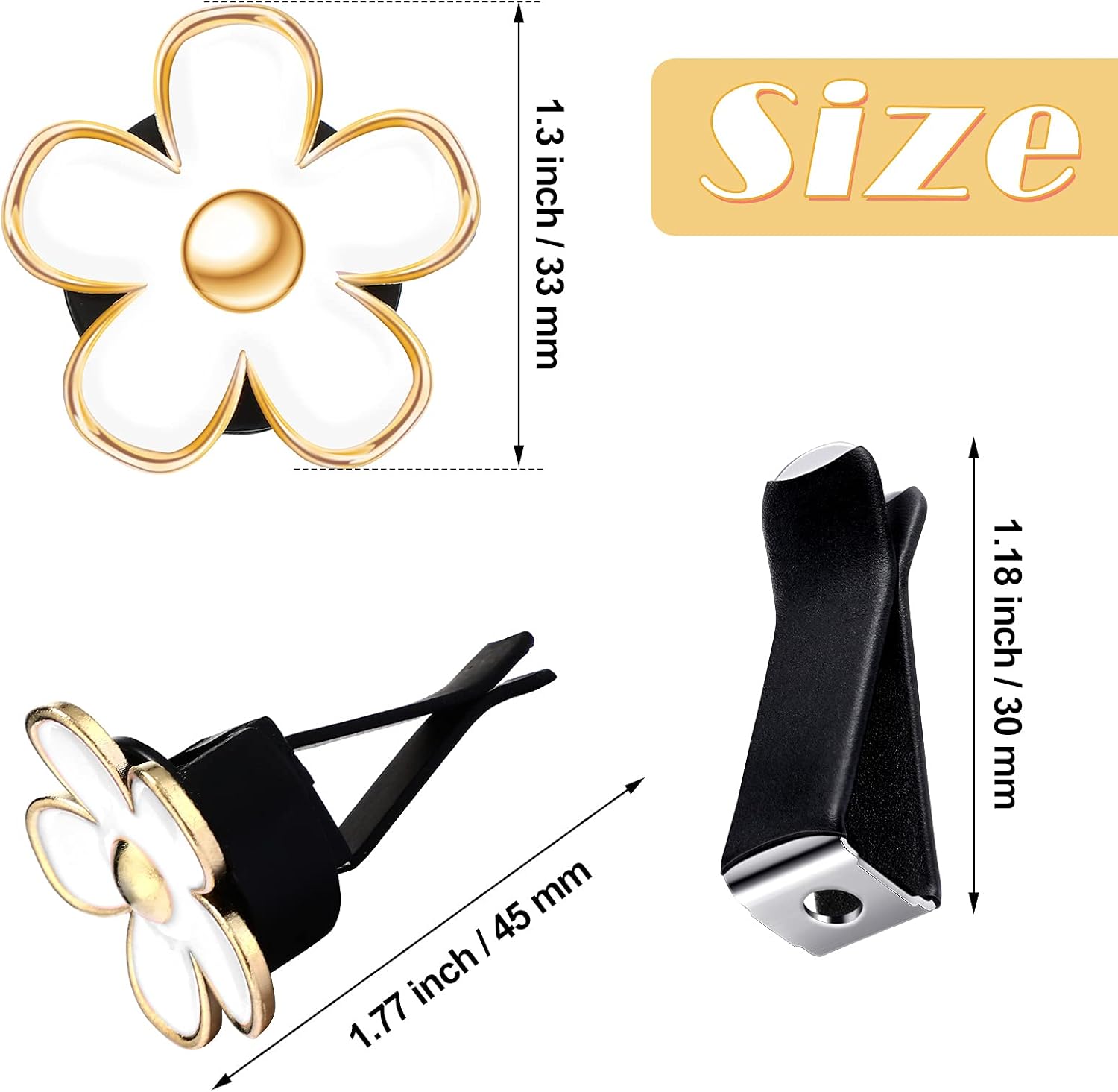
A vent clip air freshener is exactly what it sounds like: a small plastic or resin housing that clips directly onto one of the louvers (the adjustable slats) of your car’s dashboard air vents, so that moving air carries fragrance into the cabin. The decorative category — daisies, sugar skulls, pressed-floral frames, cherry blossoms — has exploded in the last three years as drivers, particularly women and fragrance-forward buyers, pushed back against the clinical look of generic cardboard hangers. But cute design and a good scent are two separate engineering problems, and plenty of attractive clips ship with fragrance oil that fades in a week, clamps so weakly they fall off at the first hard stop, or off-gas in a way that’s irritating in a sealed cabin. This guide maps the field honestly: which designs win on aesthetics and performance, which trade-offs you’ll actually feel in daily use, and where the $8 rack pick quietly beats the $28 boutique version.
Why the Decorative Clip Category Is Harder to Buy Than It Looks
If you’ve already cycled through a few of these, you know the failure modes: the clip that looks great at the store but sits at a 45-degree angle because the louver grip is designed for a standard European slat width and your vent is an American flat-blade design; the floral resin piece that smells intensely synthetic on day one and is completely odorless by day nine; or the soft-silicone daisy that curls in summer heat and starts dripping oil onto your dashboard trim.
The decorative clip market has no unified standard. Designs range from mass-market injection-molded plastic (typically sourced in volume and branded under dozens of private labels) to small-batch resin pours and artisan diffuser shells that use the same fragrance cartridge ecosystem as higher-end brands. Understanding which tier a product belongs to tells you almost everything about its longevity curve — meaning how its scent output changes over time — before you buy.
The three build categories you’ll encounter:
- Saturated-core clips — The fragrance is embedded directly in the material (a felt pad, porous plastic bead, or resin body). Scent is front-loaded and non-refillable. Most $5–$12 decorative clips work this way.
- Cartridge-slot clips — A decorative shell houses a replaceable fragrance card or mini-cartridge. The shell is the permanent piece; you swap the scent. Price range: $15–$35 for the shell, $8–$15 per refill.
- Oil-reservoir clips — A small bottle of fragrance oil sits inside or behind the decorative piece, with a wick or membrane controlling evaporation rate. More consistent throw than saturated-core; the design has to be large enough to hold the reservoir, which limits how delicate the aesthetic can be.
Car and Driver’s 2025 buying guide flags that oil-reservoir designs consistently outperform saturated-core on longevity in standardized reviewer trials, typically delivering 30–45 days of detectable scent versus 7–14 days for most embedded-core decorative clips.
Scent and Build Rankings by Design Category
Daisy Designs
The daisy is the dominant motif in this category — it photographs well, it reads as cheerful and gender-neutral enough to work across demographics, and the petal geometry gives designers natural surface area to work with.
Where daisy clips tend to succeed: The wide petal spread is actually useful for oil-reservoir designs because it hides a slightly larger chassis behind the flower face. Several brands in the $18–$28 range use a daisy front with a 5mL oil bottle rear, and reviewers across aggregated listings consistently note a more even scent curve on these compared to slim floral alternatives.
Where they struggle: Saturated-core daisy clips — the ones that feel lightweight and are priced under $10 for a two-pack — are overwhelmingly front-loaded. Apartment Therapy’s 2025 roundup of decorative car fresheners noted that several daisy-format picks in the budget tier “smell strongest on the drive home from the store and are ghostly by week two.” That’s not a design problem; that’s a physics problem with embedded fragrance that no amount of cute design fixes.
Clip grip: Daisy designs with a wide base plate (the part that touches the louver) grip more reliably than narrow-stem designs. Look for a clip jaw depth of at least 12mm — enough to anchor on both thin and wide slat profiles. This spec is worth asking about before ordering online; reviewers on major retail platforms frequently flag shallow-jaw daisies falling off on speed bumps.
Best daisy use case: If you’re buying for your own daily driver and you want a design you’ll actually leave on the vent instead of hiding it before guests get in the car, the daisy in the oil-reservoir tier is the move. Scent longevity justifies the premium. If you’re sourcing for a fleet or detail business where the clip is a value-add and you’re replacing it per client anyway, the two-pack saturated-core version makes the cost-per-use math work.
Skull and Gothic Designs
This is the fastest-growing niche in the decorative clip segment as of 2025, driven partly by fragrance collector crossover — the same buyers who follow Maison Margiela or Replica scent launches are attracted to a visual aesthetic that signals intentionality rather than generic “fresh car.”
Build reality check: Most skull-format clips are resin-cast, which is both their strength and their limitation. Resin holds detail beautifully — the sugar skull florals, the Day of the Dead color fills — but resin is also porous in ways that affect fragrance behavior. Good Housekeeping’s 2025 car freshener roundup observes that resin-cast fresheners in this category vary widely in fragrance oil quality, and the scent profiles tend toward heavier musks and dark florals specifically because lighter citrus and aquatic notes dissipate too quickly through a resin medium.
That’s not a flaw if the scent profile matches what you want — a skull clip loaded with a dark oud-adjacent or amber-vanilla oil can be genuinely compelling and is the kind of thing fragrance community members at Basenotes.net describe as an “aesthetic match” with the visual. The failure mode is when a skull clip is marketed as “fresh linen” or “ocean breeze” and the resin chemistry simply cannot sustain that light a fragrance for more than a few days.
Durability: Resin is brittle. Reviewers consistently flag that skull clips dropped on a hard floor or left in a very hot car (dashboard surface temperatures can hit 180°F in summer sun) have a higher breakage and deformation rate than silicone or ABS plastic alternatives. If you’re a detailer placing these in client vehicles, the fragility factor is worth naming to the client as a trade-off for the premium aesthetic.
Best skull/gothic use case: Personal vehicle, enthusiast buyer who cares about the full interior aesthetic story. Not ideal for fleet or high-turnover environments where handling risk is elevated.
Pressed-Floral and Botanical Frame Designs
This is the highest-design tier in the decorative clip category — resin or acrylic frames with actual dried botanicals (lavender stems, rose petals, baby’s breath) suspended inside. They are unambiguously beautiful and photograph better than almost anything else in the $15–$40 price range.
The honest performance ceiling: The botanical frame itself is inert. It doesn’t hold or release fragrance — that work is done by a thin felt pad or small oil cartridge behind or beside the frame. Because the decorative element takes up most of the chassis volume, the fragrance reservoir in botanical-frame clips is almost always smaller than in equivalent daisy or skull designs. Reviewers consistently rate these the lowest on scent longevity in their tier, with a common pattern of strong initial throw followed by a sharp drop around day 10–12.
What they’re actually good for: Short-duration placements where visual impact matters more than longevity — event vehicles, photoshoot props, gifting. For a professional detailer doing a premium interior detail for a client who will photograph and share the result, a pressed-floral clip is a high-perceived-value finishing touch that costs $18–$28 and reads as bespoke. Just set the expectation that it’s not a 30-day freshener.
By the Numbers
| Design Category | Typical Price Range | Avg. Scent Duration (Aggregated Reviews) | Breakage/Heat Risk | Best Tier |
|---|---|---|---|---|
| Daisy (oil-reservoir) | $18–$28 | 30–45 days | Low | Daily driver |
| Daisy (saturated-core) | $5–$12 (2-pack) | 7–14 days | Low | Fleet/detail |
| Skull/Gothic (resin) | $14–$32 | 14–21 days | Medium-High | Enthusiast |
| Pressed-Floral Botanical | $18–$40 | 8–14 days | Medium | Gift/event |
Duration ranges drawn from aggregated reviewer reports cited in Car and Driver, Good Housekeeping, and Apartment Therapy coverage, 2024–2025. Individual results vary by cabin size, airflow rate, and climate.
The Ingredient Conversation You Should Be Having
Decorative clips are not just a design category — they’re also the segment where ingredient transparency is most inconsistent. Because many are small-batch, private-label, or imported without full IFRA (International Fragrance Association) compliance documentation, phthalate content is genuinely variable. Detailing Wiki’s interior fragrance reference notes that phthalate-free formulations have become a meaningful differentiator in the enthusiast and professional segments precisely because clients with pets, children, or respiratory sensitivities are asking about it.
If you’re sourcing for client vehicles or households with asthmatics, look for clips that explicitly state phthalate-free fragrance oil and low-VOC formulation. This information should be on the packaging or the brand’s product page — if it isn’t listed, the working assumption among informed buyers is that it hasn’t been tested or disclosed.
Silicone-bodied clips — more common in the daisy category than skull or botanical — generally off-gas less in high-heat conditions than resin alternatives, which is worth noting for drivers in hot climates or anyone parking in direct sun for extended periods.
The Decision Framework
If you’re trying to resolve a pending purchase, here’s the if/then map:
If you want the best balance of design and daily performance → daisy-format oil-reservoir clip in the $20–$28 range. Longevity is real, build quality is workable, and the format is neutral enough to not distract from your interior.
If you’re a fragrance collector who treats your cabin as part of your personal aesthetic and the scent profile matters as much as the visual → skull/gothic resin clip, but vet the fragrance oil independently. Heavier, darker scent profiles (musks, ambers, woods) perform better in resin medium than light florals or citrus. Budget for replacement every 3 weeks rather than 4–6.
If you’re sourcing for a premium detail finish or a one-time gift → pressed-floral botanical. Highest perceived value per dollar in the decorative tier; just don’t promise your client it’s a 30-day freshener.
If you’re managing fleet cost → saturated-core daisy two-packs. Cost-per-unit math wins; replace on a two-week schedule per vehicle.
The decorative clip category rewards buyers who separate the visual decision from the performance decision and then find the design that wins on both. Those products exist — they’re just not always the most-marketed ones. Knowing the build tier before you click buy is the biggest single edge in this category.