August 25, 2026 • Mara Voss • 9 min reading time • Prices verified June 6, 2026
Chemical Guys Car Freshener Sprays: The Detailer's Finishing Touch, Priced and Scented Honestly
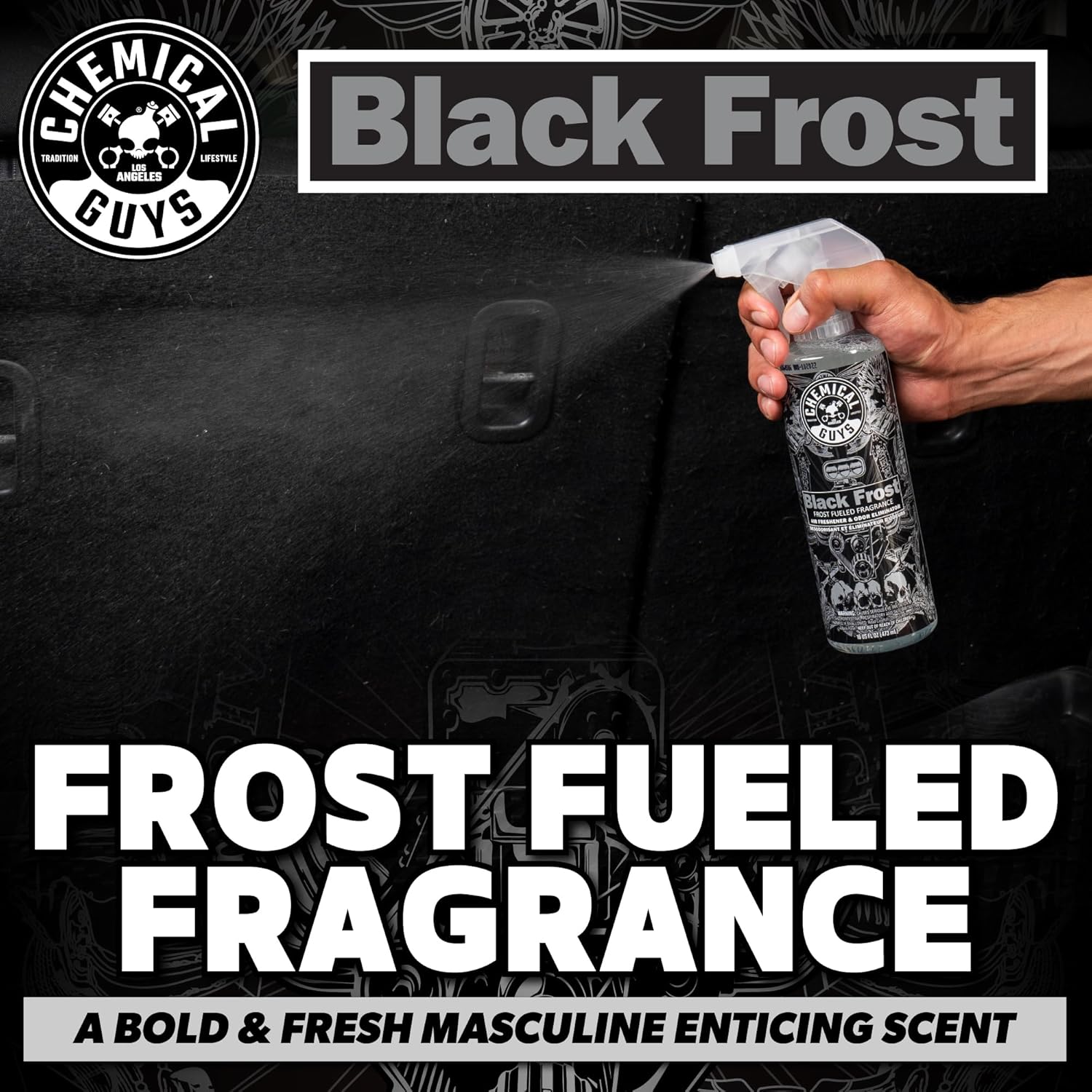
If you’ve ever picked up a car after a professional detail and thought, what is that smell and how do I bottle it — you’ve met a spray freshener in the wild. A car freshener spray (as opposed to a hanging card or a vent clip diffuser) is a liquid formula you mist directly into the cabin air, onto upholstery, or into the HVAC intake. The scent disperses immediately rather than releasing slowly over weeks. Chemical Guys, a California-based detailing brand that sells everything from paint correction compounds to interior dressings, has built a surprisingly large spray freshener lineup — over a dozen scents, all priced in the $10–$20 range per bottle — and it’s become a staple in a lot of detailers’ finishing kits. This guide breaks down what you actually get, where the value holds, and where you’d be better off spending differently.
What Chemical Guys Spray Fresheners Actually Are (and Aren’t)
Let’s be precise about the format, because it matters for decision-making.
Chemical Guys’ freshener sprays — sold under names like New Car Smell, Leather Scent, Signature Scent, and about a dozen others — are water-based, alcohol-carrier sprays in 4 oz or 16 oz bottles. You mist them into the air or onto fabric surfaces. The effect is immediate but not persistent in the way a passive diffuser is. According to the brand’s own product listings on ChemicalGuys.com, most formulas are designed to eliminate odors on contact (they include odor-neutralizing chemistry, not just masking fragrance), then leave a light residual scent for 30 minutes to a few hours depending on the cabin’s ventilation and ambient temperature.
This is the critical trade-off to understand upfront: spray fresheners are event-based, not ambient. They’re not a replacement for a vent clip or a refillable diffuser that slowly perfumes your car over weeks. They’re a finishing move — something a detailer reaches for in the last 60 seconds of a job, or that you use right before handing keys to a client or picking someone up.
Detailing Wiki’s interior detailing product overview describes spray fresheners in this category as “temporary air treatments” — distinct from both residual fabric treatments and passive ambient diffusers. That framing is useful: if you want your car to smell good right now, a spray makes sense. If you want it to smell good on Tuesday when you’ve forgotten about it, you need a different product.
The Scent Lineup: What the Fragrance Community Actually Thinks
Chemical Guys leans hard into familiar, emotionally resonant fragrance categories. Here’s an honest read of the most popular SKUs, grounded in what owners and reviewers consistently say rather than marketing copy.
New Car Smell is the flagship and the most discussed. Car and Driver’s roundup of best car air fresheners notes that “new car” scents occupy a unique psychological category — they’re less about a specific ingredient and more about an impression of clean, slightly plasticky, faintly musky freshness. Chemical Guys’ version is widely reviewed as a credible entry in this category: owners report it reads as authentic rather than artificially sweet, which is the main failure mode for cheaper “new car” aerosols. The 4 oz bottle runs around $11–$13 at most retailers as of mid-2026.
Leather Scent is the second-most reviewed. The fragrance community at Basenotes.net has a healthy skepticism for “leather” accords in mass-market products — real leather fragrance is expensive to replicate well, and most budget versions collapse into a kind of sweet, slightly medicinal note that smells nothing like an actual hide interior. By contrast, owners of Chemical Guys’ leather formula consistently describe it as landing closer to the suede/aldehyde end of the leather spectrum — not perfectly convincing, but not embarrassing either. For a detailing finish spray, that’s a reasonable bar to clear.
Signature Scent (sometimes marketed as “Black Ice-adjacent”) and the Butter Wet Wax scent (yes, they bottle the smell of their own wax, and yes, people buy it) are the polarizing ones. Good Housekeeping’s car freshener testing notes that gourmand and “sweet” car scents have strong loyalty but also high abandonment rates — customers either love them or return them. These are high-risk purchases unless you’ve sampled the scent in person or know you’re already a fan of sweet/vanilla-adjacent profiles.
The newer additions — Stripper Scent (a citrus/clean accord, not what you think) and Honeydew Melon — have smaller review pools but owners report solid scent accuracy for what they’re described as.
The Cost-Per-Use Math: Where This Format Actually Wins
Here’s where spray fresheners either justify themselves or don’t, depending on your use case.
By the numbers (4 oz bottle, ~$12 retail, mid-2026 pricing):
- Estimated sprays per bottle: 80–120 (light mist per application)
- Typical applications per detail job: 3–5 sprays
- Cost per detail finish: ~$0.40–$0.75
- Cost per day if used daily (2 sprays): ~$0.20–$0.30
For a professional detailer finishing 4–8 cars a day, the 16 oz bottle (typically $20–$25) cuts that per-job cost significantly. At roughly $0.20–$0.40 per vehicle finish on the large bottle, it’s one of the cheapest line items in a detail package — and it’s the one the client notices immediately. That’s the core value proposition.
Compare that to a passive vent clip at $8–$12 lasting 30–45 days: the cost-per-day math is similar, but the delivery mechanism is completely different. A vent clip gives the owner an ongoing ambient experience. A freshener spray gives the detailer a dramatic, immediate handoff moment. These aren’t competing products; they serve different timing in the scent experience.
Where the math gets less favorable: if you’re buying Chemical Guys sprays for personal daily use in your own car, hoping to replicate the effect of a luxury ambient diffuser, you’ll find yourself spraying frequently and burning through bottles faster than you’d expect. In that scenario, a $40–$80 passive diffuser with a quality refill is almost certainly a better long-term investment.
Detailer Workflow: How Practitioners Actually Use These
Based on aggregated reviews from detailing forum threads and professional-use write-ups — including discussions surfaced in Car and Driver and MotorTrend’s detailing coverage — the standard practitioner workflow looks like this:
-
Interior cleaning is fully complete before any freshener goes in. Spraying over unresolved odor sources (pet dander in carpet, mildew in seat foam, stale food residue) is a masking exercise that clients will see through within 24 hours. Odor neutralization only works on surfaces it contacts; it can’t fix what’s still trapped in padding.
-
HVAC treatment first if needed. Some detailers run a spray into the cabin air intake with the system on recirculate — this treats the evaporator area, which is where musty HVAC smells originate. Chemical Guys formulas are documented as safe for this use on their product pages.
-
Final cabin mist with windows closed for 60–90 seconds, then ventilate. This is the “handoff scent” — the burst the client experiences when they open the door.
-
Leather/fabric-specific spray on appropriate surfaces if the scent profile supports it (the leather formula on leather trim, for instance).
The Detailing Wiki’s interior product overview specifically calls out the risk of over-application: more spray doesn’t mean longer duration, it means a brief period of overwhelming intensity followed by the same fade curve. Two or three measured mists from 18–24 inches out is the consistent professional recommendation.
Honest Trade-offs: When to Use Chemical Guys, When to Skip It
Use Chemical Guys spray fresheners if:
- You’re a detailer and want a fast, low-cost, recognizable-brand finish product that clients associate with quality.
- You need immediate scent impact — a showing, a sale, a date pickup — and don’t have time for a passive diffuser to do its work.
- You’re already in the Chemical Guys ecosystem and want scent compatibility with their other interior products (several owners note that Butter Wet Wax scent works surprisingly well as a cabin follow-up after using the actual wax product).
- You want odor neutralization plus scent in one step, not two separate products.
Consider alternatives if:
- You want ongoing ambient scent between details. A Pura, Onboard Scents, or Vitalize Scents diffuser will outperform any spray freshener on persistence and scent-throw consistency over time.
- You’re sensitive to VOCs or shopping for a vehicle where a child or pet will be spending time regularly. Chemical Guys does not publish detailed VOC or phthalate content data for their freshener sprays as of mid-2026, which is a legitimate gap for buyers in this category. Low-VOC alternatives from brands that publish ingredient transparency are worth seeking out if this matters to you.
- You want a luxury fragrance experience — something Creed Aventus-inspired or Maison Margiela-adjacent in your cabin. The Chemical Guys lineup is anchored in “clean/fresh” and “new car/leather” territory, not haute-parfumerie. That’s not a failure; it’s just not what the product is.
The Decision Rule
If you’re a detailer finishing client vehicles: the 16 oz bottle is the obvious buy at ~$0.20–$0.40 per job. New Car Smell or Leather Scent are the safest choices for the widest range of client preferences — neither is polarizing. Stock both, use based on the vehicle’s interior material.
If you’re a driver wanting your own car to smell good consistently: this is a secondary tool, not a primary one. Buy the 4 oz to keep in your detail bag or glovebox for event-specific freshening. For day-to-day ambience, pair it with a passive diffuser system that does the quiet background work.
If you’re evaluating whether Chemical Guys specifically beats a store-brand detailing spray freshener: per aggregated owner reviews and the Car and Driver freshener roundup, the Chemical Guys formulas are genuinely better-calibrated than most private-label equivalents — less sweet-synthetic, better throw-to-fade ratio. Whether that’s worth a $3–$5 price premium per bottle is a judgment call that depends entirely on your volume and whether brand recognition matters in your client-facing context.
The scent is real. The finish is fast. The math works at professional scale. Just go in knowing it’s a sprint, not a marathon.