September 2, 2026 • Mara Voss • 9 min reading time • Prices verified June 6, 2026
Dog Owners, Smokers, Gym Bags: Which Freshener Format Survives the Hardest Car Odors
If you’ve ever climbed into your car after a long weekend with a wet dog, or inherited a vehicle from a smoker, you already know the dirty truth about most car air fresheners: they are not designed for what you’re dealing with. A “freshener” — any product that adds a pleasant scent to an enclosed space — and an “odor eliminator” — a product that chemically neutralizes or physically absorbs odor molecules rather than masking them — are two different animals. The marketing language blurs the line on purpose. This guide draws it back. Whether you’re managing a golden retriever who rides shotgun daily, a cabin that still smells like someone’s cigarette habit from 2019, or a gym bag that spent two hours on your back seat, the format you choose matters as much as the brand. By the end, you’ll have a clear decision framework: if your odor is X, your format is Y.
Why “Severity Level” Is the Wrong Way to Think About This
Most buying guides sort fresheners on a 1–5 severity scale. That framing misses something important: the type of odor matters more than its intensity, because different odor compounds respond to different chemistry.
Dog smell is primarily dander, skin oils, and occasionally urine — organic compounds that bond to fabric and carpet. Cigarette smoke is a layered problem: volatile organic compounds (VOCs) in the air plus tar and particulate matter that physically embed in headliners and seat foam. Gym gear and fast food are transient — strong in the moment, but mostly airborne and quick to dissipate. Mold and bacterial odors (think: damp floor mats left wet for a week, or raw protein left in a hot car) produce compounds like dimethyl disulfide and trimethylamine that standard masking agents don’t touch at all.
Reviewers at Good Housekeeping note this distinction clearly in their 2025 freshener roundup: products rated well for “gym bag” situations consistently underperformed against embedded smoke, even when the scent throw was strong. Car and Driver’s 2025 air freshener guide draws the same line between “odor masking” and “odor elimination” products, flagging that buyers conflate the two categories routinely.
The practical split:
| Odor Type | Primary Compound | Masking Works? | Elimination Needed? |
|---|---|---|---|
| Dog (dander/oils) | Organic proteins | Partially | For heavy cases, yes |
| Cigarette smoke | VOCs + particulate tar | No | Yes |
| Gym gear / fast food | Airborne VOCs | Yes | Rarely |
| Mold / bacteria | Sulfur compounds | No | Always |
Format-by-Format: What Each Tool Actually Does
Vent Clips and Hanging Fresheners (The Masking Tier)
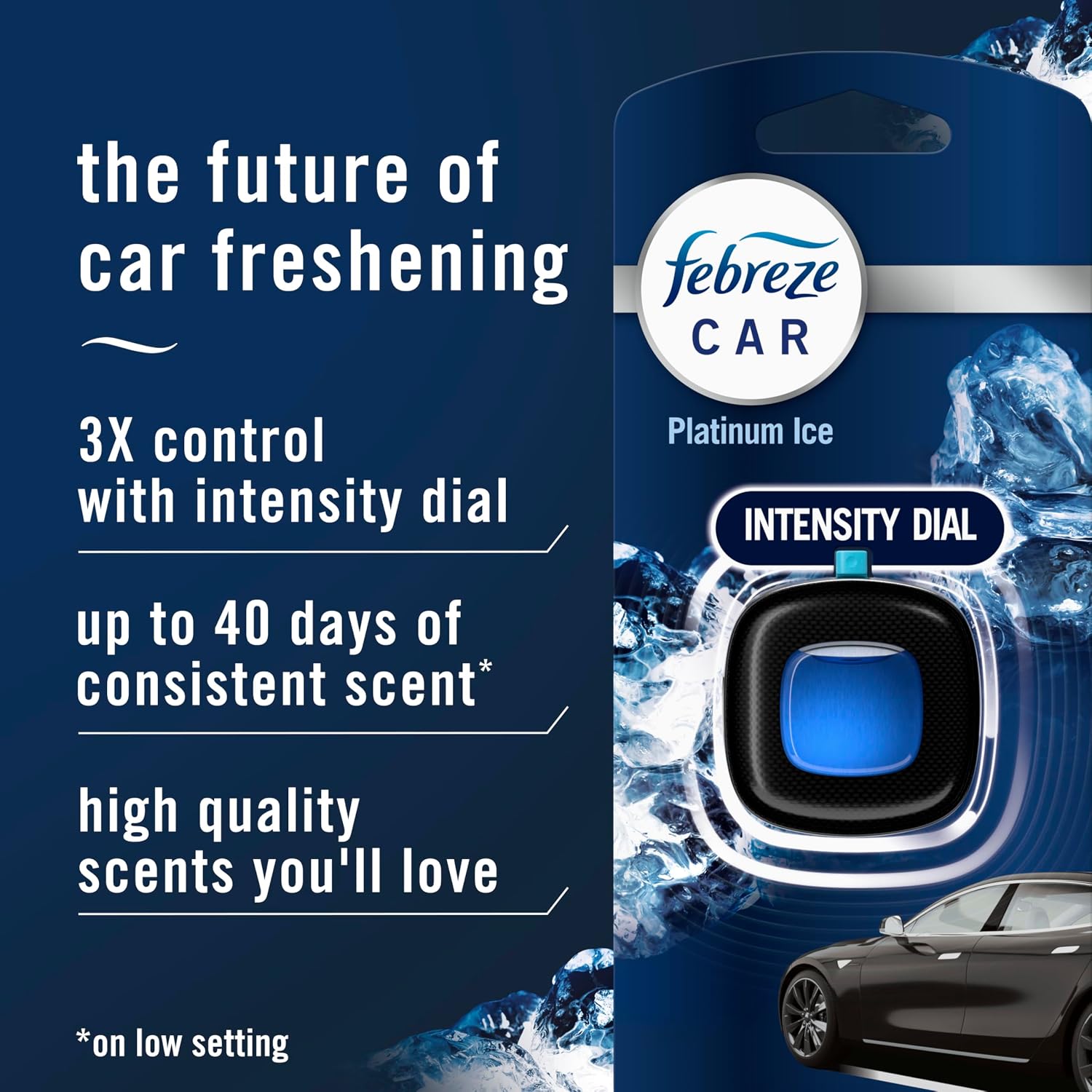
These are your workhorses for ambient odor management — not remediation. The Febreze Platinum Ice vent clip, which reviewers consistently describe as their go-to for dog-heavy cabins, has one genuine advantage over a standard hanging tree: the adjustable dial. Owners report using the lower settings on moderate dog days and cranking it up after a beach trip with a wet Lab. That tunability matters because over-fragrancing a small cabin is its own problem, especially for owners with scent sensitivities.
The Febreze Unstopables line gets called out by name in reviews for fast food and gym gear — reviewers specifically mention sweaty workout clothes and damp floor mats. That tracks with what the product is doing: adding a persistent fabric-conditioner-style scent layer that competes aggressively with transient airborne odors. For gym bag odors that aren’t yet embedded in upholstery, this format often wins on convenience alone.
The honest tradeoff: neither format neutralizes dog smell at the source. They reduce the perception of it through scent competition. If your dog rides daily and your seats are cloth, you are managing, not solving. For occasional riders and leather interiors that wipe clean, a quality vent clip may be genuinely sufficient.
Activated Charcoal Bags (The Slow-Draw Absorber)
Activated charcoal works through adsorption — odor molecules physically bind to the porous surface of the charcoal rather than being masked or chemically broken down. Apartment Therapy’s 2024 deep-dive on activated charcoal odor control explains the mechanism clearly: the bags need airflow and time to work, which is why reviewers who expect immediate results are always disappointed.
The review pattern for activated charcoal bags tells a specific story. Buyers describe using them in leather furniture and lockers with embedded odors — scenarios where the bag sits stationary for days or weeks. One common reviewer scenario involves a backpack sealed in a bag outdoors; another describes a car left undriven for several days with charcoal bags placed on the seats. The throughline is dwell time. These are not grab-and-go solutions.
For a dog-owner’s daily driver, the practical play is to leave charcoal bags on the back seat overnight or on days the car sits in the garage. Over weeks, reviewers report a genuine baseline improvement — not dramatic, but measurable. For smoke, the charcoal bag helps with the airborne VOC fraction but does nothing for tar that’s already bonded to the headliner.
The honest tradeoff: charcoal bags are the lowest-drama, lowest-chemical, most pet-safe format on this list. For owners worried about phthalates or VOC exposure — the Detailing Wiki’s odor elimination guide flags synthetic fragrance compounds as a consideration for enclosed spaces with pets and children — charcoal is the cleanest choice. It just requires patience.
Whole-Car Fogger / Odor Bomb (The Nuclear Option)
This is where the reviewer scenarios get vivid. Meguiar’s Whole Car Refresher buyers describe situations that are genuinely alarming: an old Civic with years of gym bag and food smell baked into the interior, a Land Cruiser with an unidentifiable embedded odor from a previous owner. Chlorine dioxide fogger reviewers go further — rotten milk mixed with moldy bread after a professional detail failed to solve it; raw fish left in a closed car in Arizona heat for five days.
These are not edge cases. They represent a real segment of buyers who have already tried everything else.
Here’s the mechanism: odor bombs typically work through one of two pathways. Enzyme-based products like Meguiar’s use oxidizing agents and surfactants to break down organic compounds. Chlorine dioxide foggers release ClO₂ gas, which is a powerful oxidizer capable of reaching into fabric weave, foam, and HVAC ducting that no spray or bag can access. The Detailing Wiki’s odor elimination guide describes chlorine dioxide as the professional standard for severe biological contamination precisely because of its penetration depth.
The honest tradeoff: these products are not for maintenance. They are remediation tools. Using a fogger in a car that has mild dog smell is like using a pressure washer to clean a window — technically functional, but dramatically oversized for the job. The other reality is that enzyme and ClO₂ products genuinely strip odors rather than masking them, which means if your car had a pleasant existing scent, that goes too. You’re starting from neutral.
The Pairing Logic: When One Format Isn’t Enough
For the heaviest situations — inherited smoke cars, dogs who ride daily in cloth-seat vehicles, or post-flood mold — the most consistent reviewer outcome involves a sequence rather than a single product.
The sequence that works:
- Fogger first. One chlorine dioxide or enzyme bomb treatment with the HVAC running on recirculate, per the product instructions. This handles the embedded compound layer.
- Charcoal bags second. Left in the car for one to two weeks post-treatment to absorb the residual off-gassing as compounds continue to release from foam and carpet.
- Vent clip ongoing. Once the baseline is reset, a quality vent clip like Febreze Platinum Ice handles the maintenance layer — fresh dog rides, gym bags, fast food — without needing another nuclear option.
Cost-per-day math across this sequence: a single-use fogger runs roughly $10–$15; a pack of charcoal bags $15–$25 with a recharge life of one to two years in sunlight; a premium vent clip refill cycle costs approximately $0.30–$0.50 per day. Compared to a professional ozone treatment at a detail shop — which can run $75–$150 per session — the DIY sequence is dramatically cheaper with comparable outcomes in most non-commercial scenarios.
Frequently Asked Questions
Will a Febreze vent clip actually neutralize dog smell or just cover it? Mostly cover it, with some genuine odor reduction from Febreze’s cyclodextrin technology — a molecule that traps and binds some odor compounds rather than just competing with them. Car and Driver’s 2025 guide notes this mechanism works better on light-to-moderate organic odors than on heavy embedded ones. For a dog who rides occasionally, it can feel like neutralization. For a daily driver with cloth seats, it’s management, not elimination.
How do activated charcoal bags work differently from a vent clip freshener? A vent clip adds scent to the air. A charcoal bag removes odor molecules from the air by physically trapping them in its porous surface — no fragrance added, no chemistry involved. They work best in still, enclosed spaces over time. They do not produce any immediate sensory result, which confuses buyers expecting a fast freshener.
When should I use a chlorine dioxide odor bomb instead of a regular freshener? When the odor has survived multiple freshener attempts and is clearly embedded in foam, fabric, or the HVAC system. The vivid reviewer scenarios — rotten dairy, raw fish in a hot car, mold after flooding — are the right mental benchmark. If your situation sounds like one of those, a fogger is the appropriate tool. If it sounds more like “my car smells a little like my dog,” start with a vent clip.
Can I use the Meguiar’s Whole Car Refresher in a car that has a really bad smell, or is it just for maintenance? It’s built for exactly the bad-smell scenarios. Reviewers consistently use it for inherited-car situations and embedded odors that fresheners couldn’t touch. It’s not a maintenance product — it’s a reset product. Use it when you need to start from zero, then maintain with lighter tools.
Is pairing an activated charcoal bag with a vent clip better than using either alone? Yes, and the logic is clean: they operate in different modes. The charcoal bag works on the ambient air over time; the vent clip delivers immediate scent with each drive. Together, the charcoal handles the background baseline while the clip manages the in-use experience. Reviewers who describe this pairing report the most consistent long-term results for dog and light-smoke situations.
How long after using an odor bomb can I safely drive the car again? Manufacturer instructions vary, but the standard guidance — consistent across Meguiar’s and chlorine dioxide fogger products — is a minimum of fifteen to thirty minutes of ventilation with all doors open after the treatment cycle completes. For ClO₂ specifically, the Detailing Wiki’s odor elimination guide recommends confirming no residual chemical odor before extended enclosed driving. When in doubt, treat the car at night and drive it the following morning with windows cracked for the first few miles.