September 12, 2026 • Mara Voss • 10 min reading time • Prices verified June 6, 2026
Air Spencer CS-X3 Squash Refill Guide: How to Keep Running Costs Down on a Cult Freshener
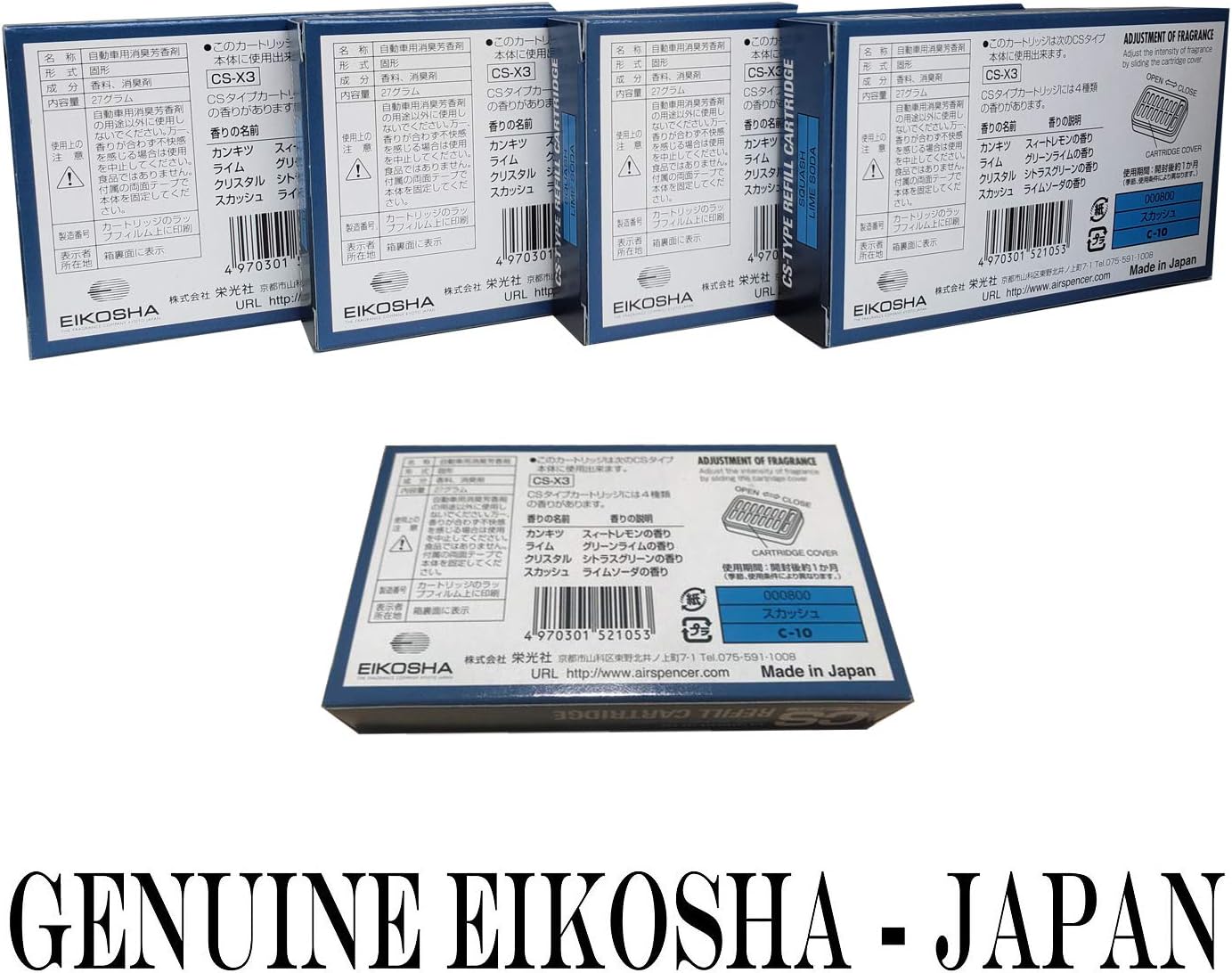
If you’ve just picked up an Air Spencer CS-X3 — a small, cube-shaped Japanese-made air freshener unit that sits on your dashboard and releases scent from a replaceable gel cartridge — you already made the hardware decision. The CS-X3 is the unit; Squash is the scent, a bright, slightly sweet green melon fragrance that has developed a following unusual for a $15-range dashboard accessory. The refill cartridge (sometimes called a “case” in Air Spencer packaging language) is the consumable part of the system. This article is not about whether to buy the CS-X3 — you’re past that. It’s about how to manage the ongoing cost of refills intelligently: when multi-packs pay off, how to avoid counterfeit cartridges that are now actively circulating, and how to interpret the very common experience of suddenly “losing” the scent even when the cartridge isn’t empty.
If you’re the kind of driver who treats the inside of your car as an intentional space — and the review record for this product includes multiple owners describing a decade or more of continuous use — then the refill economics matter more than the hardware cost ever did.
The Real Cost Equation: Single Refills vs. Multi-Packs
The CS-X3 is often described as a “gateway” product by reviewers on Fragrantica community threads and Basenotes.net owner discussions: the unit itself is accessible, but the running cost is where you either commit to the system or drift back toward single-use hanging fresheners. Let’s do the math plainly.
By the numbers (2026 pricing, US market):
| Format | Approx. unit cost per cartridge | Typical claimed longevity |
|---|---|---|
| Single refill | ~$7–$9 | 30–60 days |
| 4-pack | ~$5.50–$6.50 per cartridge | Same per cartridge |
| 5-pack | ~$5.00–$6.00 per cartridge | Same per cartridge |
Across aggregated reviewer commentary — including long-term owners on Basenotes.net and repeat purchasers who document their buying cadence in review threads — the pattern is consistent: multi-packs are the only format that brings the per-day cost of the CS-X3 system into genuine competition with mass-market alternatives. At single-refill pricing, you’re paying roughly $0.15–$0.25 per day for scent, which isn’t outrageous, but it’s also not dramatically cheaper than a Febreze vent clip on a per-day basis once you account for the hardware investment. At 5-pack pricing, the cost-per-day math shifts meaningfully in the CS-X3’s favor — particularly because the scent quality and throw are consistently rated as superior by reviewers who’ve made direct comparisons.
The practical decision rule here: if you’re buying your third or fourth single refill, you’ve already proven you’re committed to the scent. Stop buying singles. The 4-pack or 5-pack is the correct format for anyone past the trial phase. Several long-term owners in review threads explicitly describe the switch to bulk buying as “the point” of the system — one reviewer’s framing, quoted in aggregated Fragrantica commentary, positions the multi-pack specifically as the break from “cheap plastic vent clips.”
One real caveat: multi-packs have a shelf life consideration. The gel cartridges are sealed, and most owners report no degradation in sealed cartridges stored at room temperature for 12–18 months, but storing them in a hot car or garage will accelerate off-gassing even through the sealed packaging. Buy multi-packs; store them indoors.
Nose Blindness: Why Your CS-X3 Seems to Stop Working (and Why It Probably Hasn’t)
This is the most frequently misdiagnosed “problem” with the CS-X3 Squash, and it’s worth addressing directly because it drives a lot of unnecessary early refill purchases.
Olfactory adaptation — commonly called nose blindness — is the phenomenon where your brain stops registering a constant background smell because it’s no longer “new information.” It happens with every ambient fragrance system, but it’s especially well-documented in the CS-X3 owner community because the Squash scent is distinctive enough that newcomers to your car notice it immediately while you’ve stopped registering it entirely. Car and Driver’s coverage of cabin scent systems notes this as a standard feature of any fixed-position diffuser, not a product defect.
The diagnostic question is simple: does a passenger who hasn’t been in your car recently comment on the scent? If yes, the cartridge is working. Your nose has adapted. This is normal, expected, and not a reason to replace the cartridge.
A Tesla owner’s experience — documented in reviewer commentary aggregated across enthusiast forums — is the clearest case study: the owner reports stopping noticing the Squash scent within the first two weeks of use but continues receiving unsolicited compliments from every new passenger. The cartridge was not empty. The diffuser was functioning correctly. The owner’s olfactory system had simply categorized “Squash” as background and stopped flagging it.
Practical implication for refill budgeting: Don’t start the replacement clock when you stop smelling it. Track calendar days instead. Published guidance from Carmate (Air Spencer’s parent manufacturer) and corroborated by owner reports puts realistic cartridge life at 30–60 days in daily driving, with variation based on climate (heat accelerates release), vehicle size (larger cabins dilute concentration), and whether the unit lid is fully open or partially closed. If you’re in a hot climate and running the unit with the lid fully open, plan for 30-day replacements. In a temperate climate with partial lid closure, 45–60 days is achievable.
The Counterfeit and Generic Refill Problem
This is the section that warrants the most caution, and it’s underreported in casual buying guides.
The CS-X3 and the Squash scent have enough cult status — Basenotes.net discussion threads document the product’s following going back well over a decade — that the refill cartridge market has attracted generic and counterfeit alternatives. The risk profile here is directly analogous to the generic refill risk documented in reviews of other cult-status Japanese freshener products: reviewers who have tried non-OEM alternatives consistently describe the experience as “not quite right” at best and “completely different scent profile” at worst.
A review note from the Drift product category (a separate but related product in the Japanese dashboard freshener space) explicitly warns against cheaper generic alternatives, describing scent accuracy as a near-total loss. The same principle applies to Air Spencer refills: the Squash scent has a specific top-note profile — a melon-forward green freshness with a mild aquatic undertone — that appears to be difficult to replicate accurately. Generic cartridges often drift toward a generic “fruity” profile that long-term Squash owners consistently flag as wrong.
The counterfeit risk is also a practical concern, not just a quality one. Detailing Wiki’s notes on air freshener product integrity flag that unofficial refill cartridges may use fragrance compounds with different VOC (volatile organic compound) profiles than the originals — a real consideration for owners who’ve chosen the CS-X3 partly because it avoids the aggressive chemical smell of many mass-market alternatives.
The clear decision rule: Buy OEM Air Spencer CS-X3 Squash refills. The multi-pack price difference between genuine and generic is small enough that there’s no compelling cost argument for generics, and the quality delta documented by reviewers is large. If a price seems too low to be a legitimate multi-pack of authentic cartridges, it probably is.
Where you buy matters: authorized distributors of Japanese automotive accessories, established automotive accessory retailers, and the main marketplace platforms where seller reputation is verifiable are the appropriate channels. Deeply discounted listings from unverifiable sellers are the specific risk vector.
Has the Formula Changed? Addressing a Real Concern Among Long-Term Users
This comes up consistently in Basenotes.net and Fragrantica-adjacent discussions among owners who’ve been using Squash for five years or more: the perception that recent cartridges smell “different” from older ones.
The honest answer, based on aggregated reviewer commentary and the absence of any official reformulation announcement from Carmate, is: probably not meaningfully, but possibly slightly. Fragrance compound sourcing changes happen without formal announcement across the industry, and the CS-X3 is not immune to this. Reviewers who describe a perceived change most commonly report that the current formula reads as “a little less sharp” or “slightly sweeter” than batches from several years ago — a subtle shift, not a reinvention.
The more likely explanation for most owners, though, is the reference-point problem: if you’ve been using the scent continuously for several years, your memory of the “original” is itself subject to the distortions of long-term memory. Reviewers who try Squash for the first time in 2025 or 2026 describe it in terms consistent with how long-term owners described it at launch — melon-forward, fresh, distinctive. The balance of evidence suggests the core profile is intact.
If you’re a long-term user who genuinely believes the formula has shifted, the actionable response is to buy a small quantity from a different distributor batch and compare. If the scent reads differently across two batches from different sources, that’s a more meaningful data point than memory comparison alone.
Frequently Asked Questions
How long does one Air Spencer CS-X3 Squash cartridge actually last in daily use?
Manufacturer guidance and owner-reported experience both converge on 30–60 days as the realistic range. The variables that compress that range toward 30 days: hot climates, full lid-open position, larger cabin volume, and frequent door-opening cycles that vent the cabin. The variables that extend toward 60 days: temperate climates, partial lid closure, compact cabin size. Track calendar days from installation rather than relying on your nose as the indicator — olfactory adaptation will fool you well before the cartridge is depleted.
Are third-party Air Spencer refill cartridges as good as the official ones?
Based on consistent reviewer reports, no. The Squash scent profile is specific enough that off-brand or generic refills reliably miss it, typically drifting toward a generic fruity or green fragrance that long-term Squash owners describe as clearly wrong. The cost savings are minimal relative to the quality loss. OEM refills in multi-pack format are the correct purchase.
Is it worth buying the 4-pack or 5-pack vs. single refills?
Yes, if you’ve confirmed you like the scent and plan to keep running the system. The per-cartridge cost difference is real and meaningful over a year of use. The only reason to buy singles is to test the scent before committing — once you’re past that, multi-pack is the correct format.
Why did my Air Spencer stop smelling after a week — is it empty?
Almost certainly not. One week is far too short for normal depletion. What you’re experiencing is olfactory adaptation — your brain has categorized the scent as background and stopped alerting you to it. Invite a passenger who hasn’t been in your car recently and ask for their honest reaction. If they can smell it, the cartridge is working normally. Reset your replacement schedule to calendar days, not nose perception.
Has the scent formula changed in recent years compared to older cartridges?
No confirmed reformulation has been announced by Carmate. Some long-term users report a subtle perception of change, but first-time buyers in 2025–2026 describe the scent in terms consistent with the product’s established reputation. The more likely explanation for the perception gap is memory distortion over time rather than a genuine formula change. If concerned, test across batches from different distributor sources.
The CS-X3 Squash is one of the better-argued cases in the dashboard freshener space for a refillable system over disposables — but only if you run it efficiently. Multi-packs, OEM cartridges, and calendar-based replacement tracking are the three operational habits that make the economics work. Everything else is just enjoying the scent.